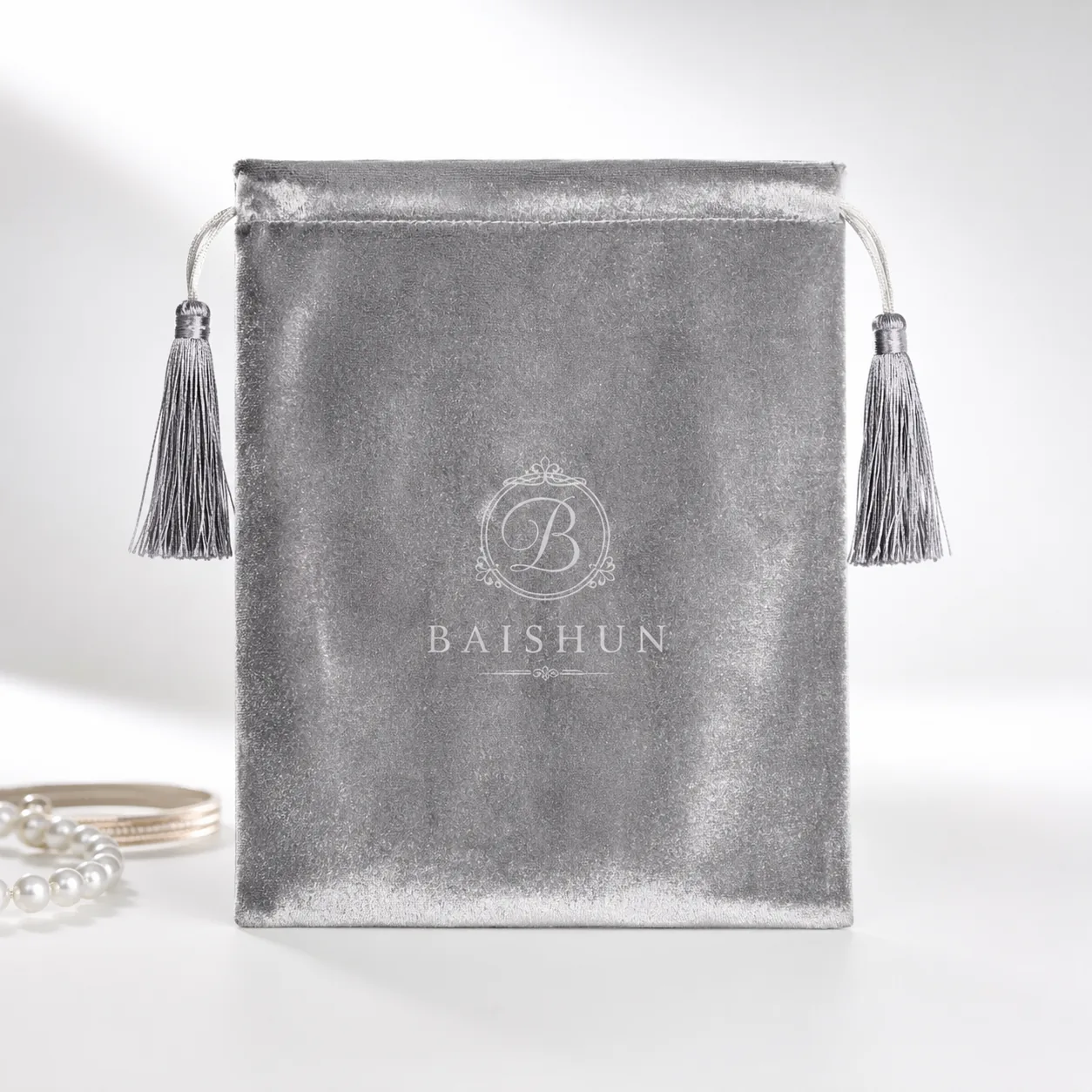

Presentation detail as part of the construction
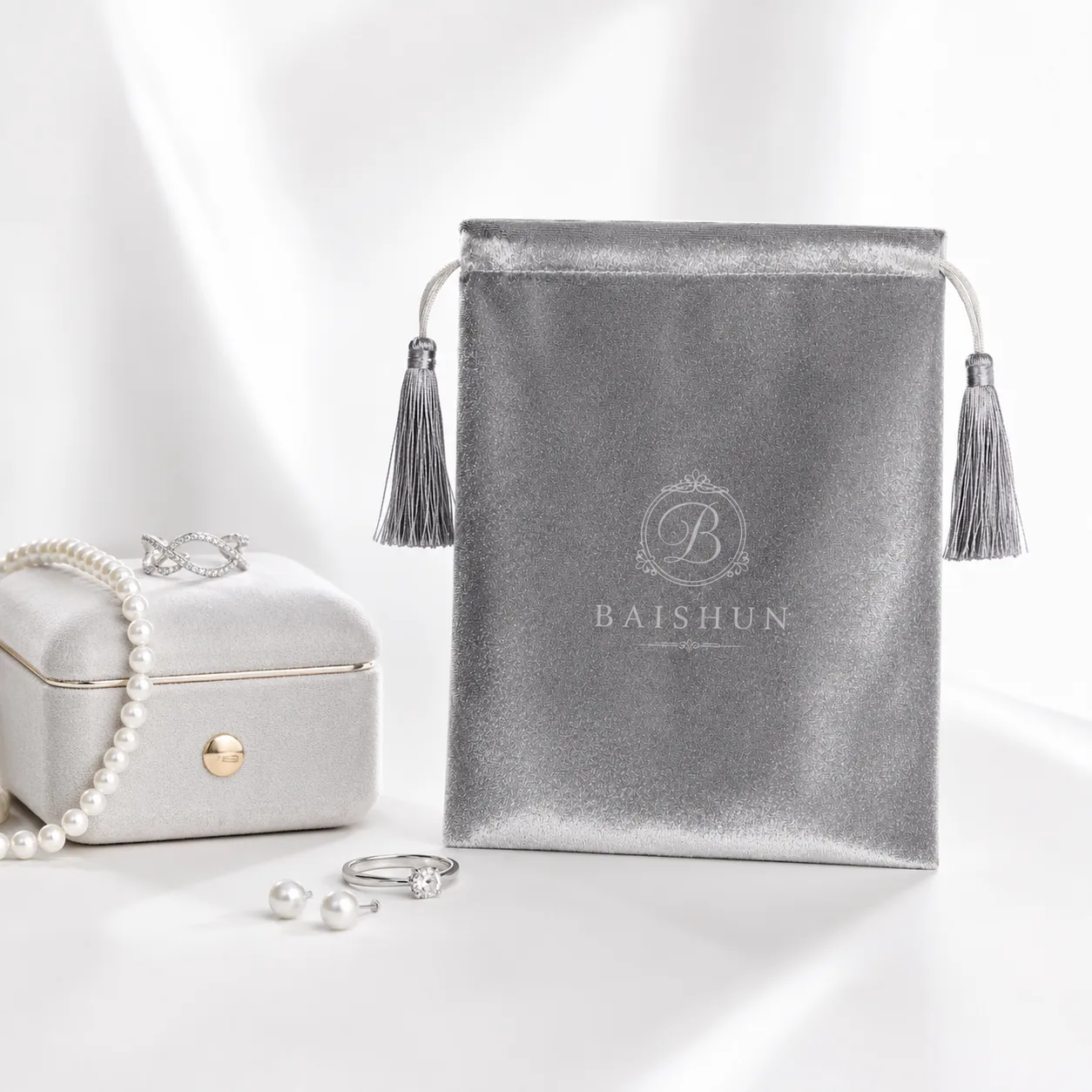
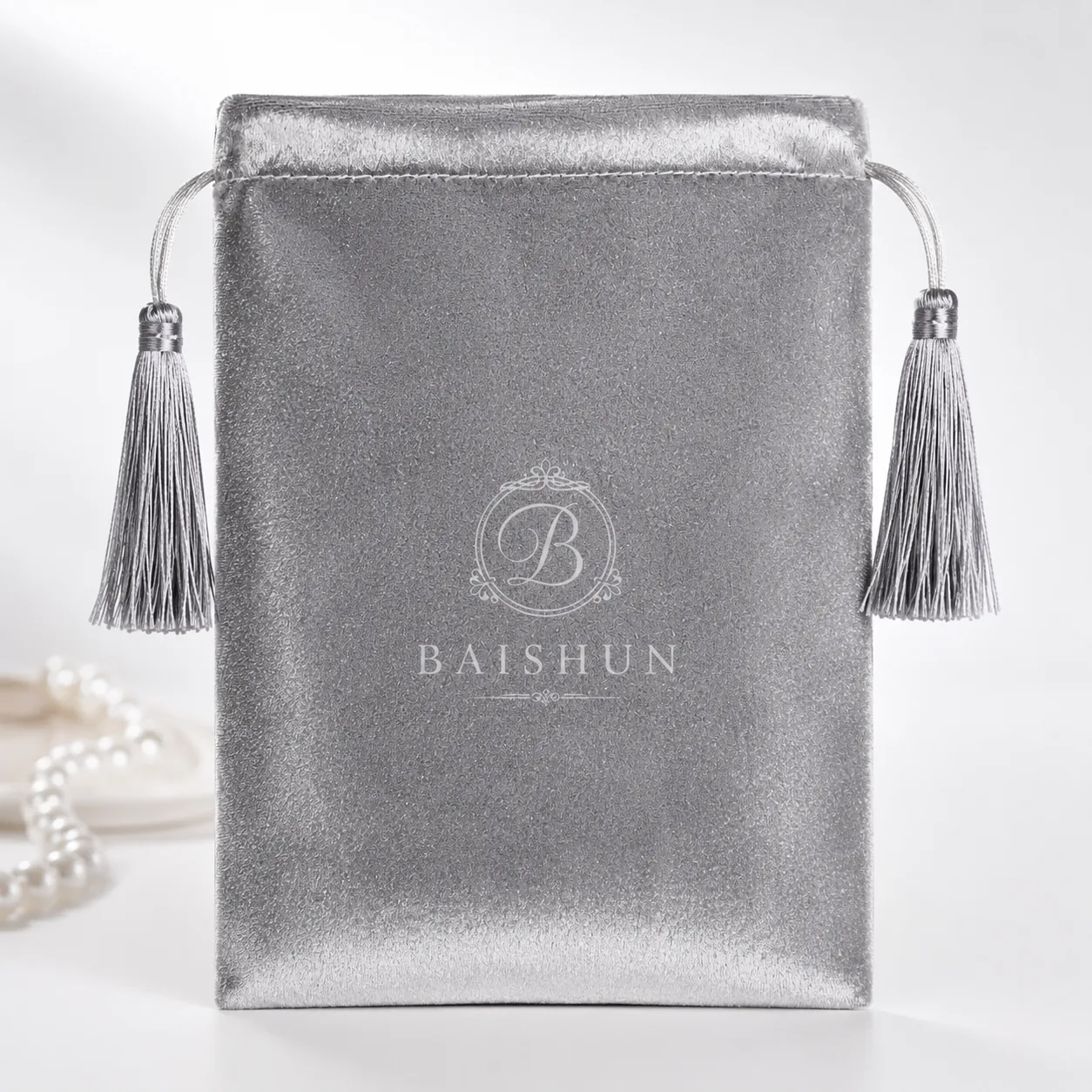
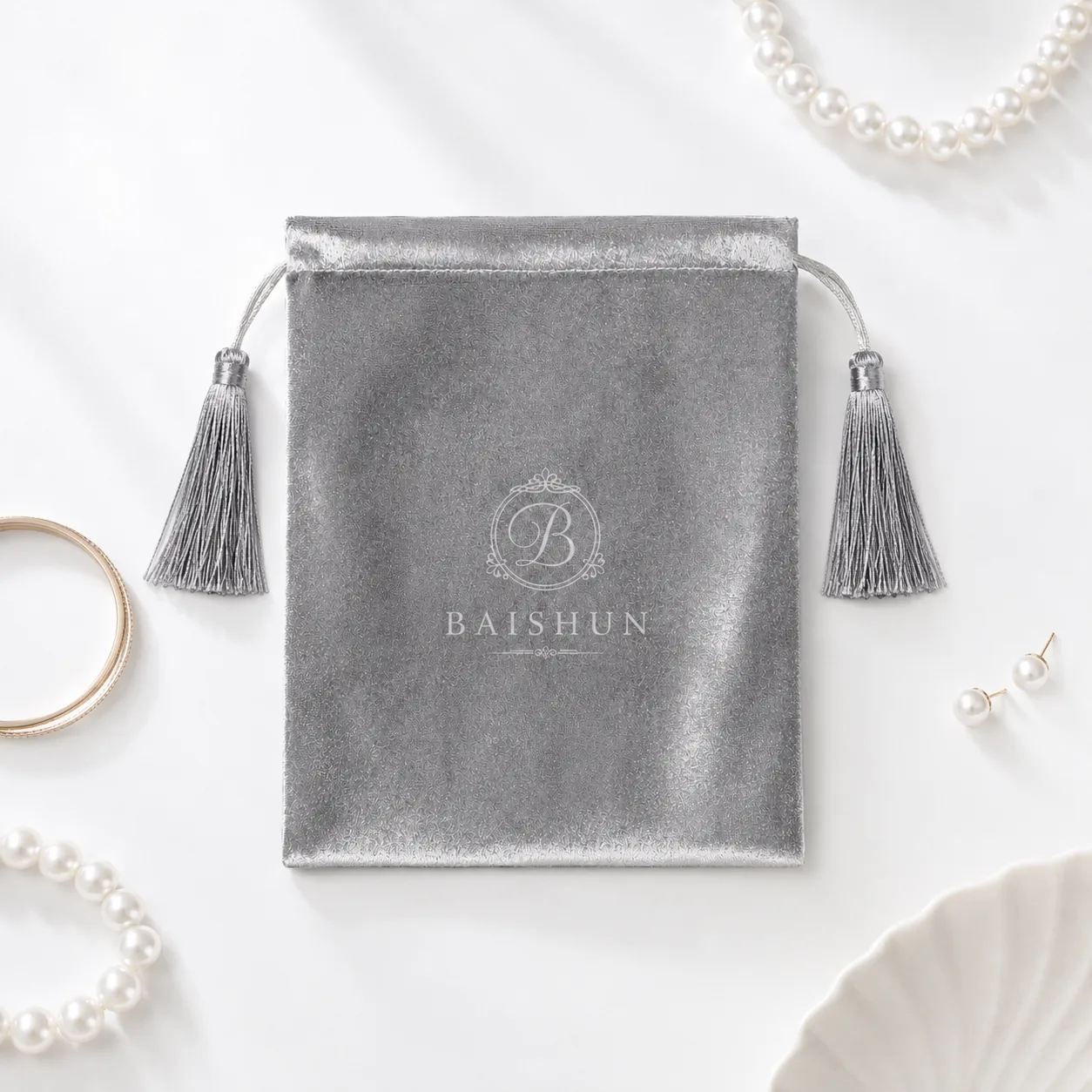
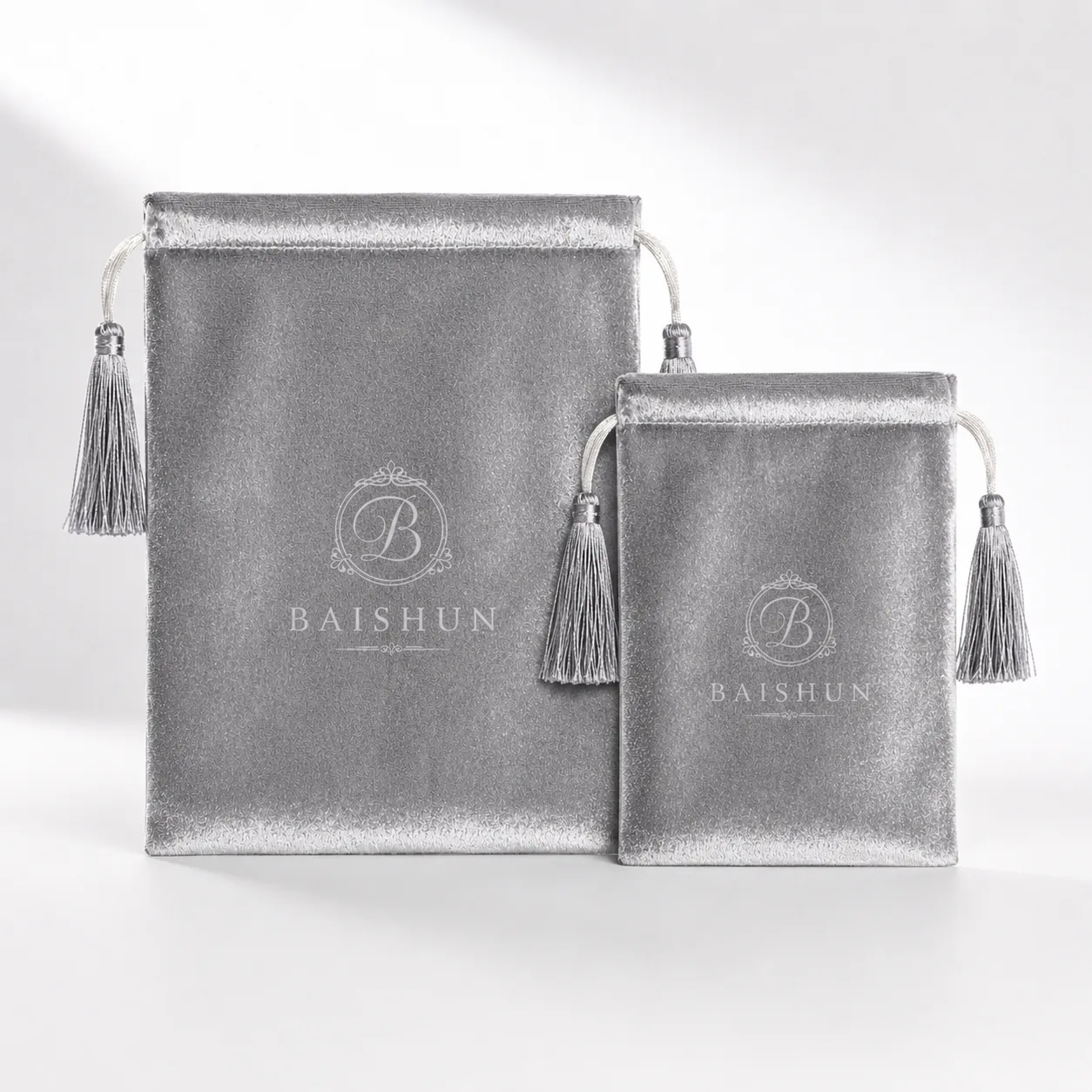
A tassel is a finishing element that also functions as a pull. It is specified with the cord rather than added to it, and it is worth confirming on a physical sample because proportion is what makes it read as considered rather than decorative.
How a drawstring closes
A drawstring gathers the mouth of the pouch rather than sealing it. It is forgiving of contents that vary slightly in size, and it presents well as a gift because opening it is a deliberate gesture. The cost is height: the channel and the gather both need headroom above the contents, so the finished pouch is always meaningfully taller than what goes in it. Specify from the packed contents and let the clearance be added to the pattern.
Check the cord runs freely and gathers evenly on a packed sample — a drawstring that closes cleanly when empty can bunch on one side when full.
Metallic detail as the accent
A metallic cord or trim carries the accent without adding a print or foil setup, which makes it an efficient way to lift a plain construction at lower volumes. Metallics are also the element most sensitive to the body colour behind them: the same gold reads warm against ivory and brassy against grey. Approve the pairing on one made sample rather than approving the two components separately.
The fabric
The suede-feel surface is dense, short-pile and low-lint, which is why it is used where the fabric is in constant contact with polished metal, stones or lenses. It debosses cleanly and takes foil well. Colour shifts with pile direction, so approve a physical swatch with the nap running the production direction rather than judging from a photograph.


