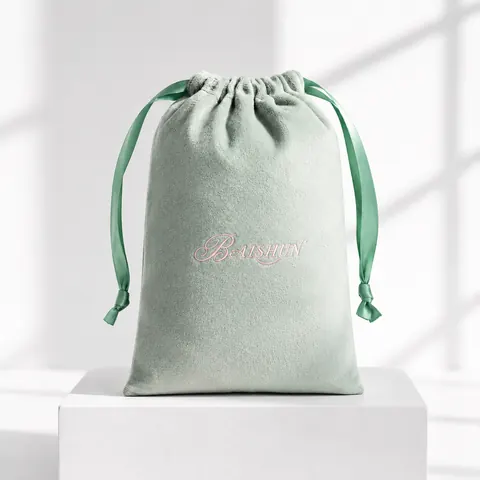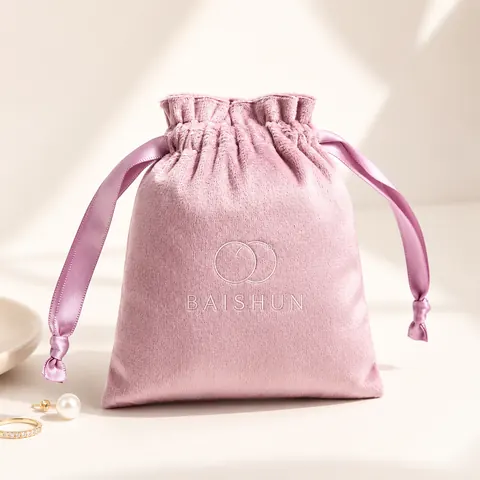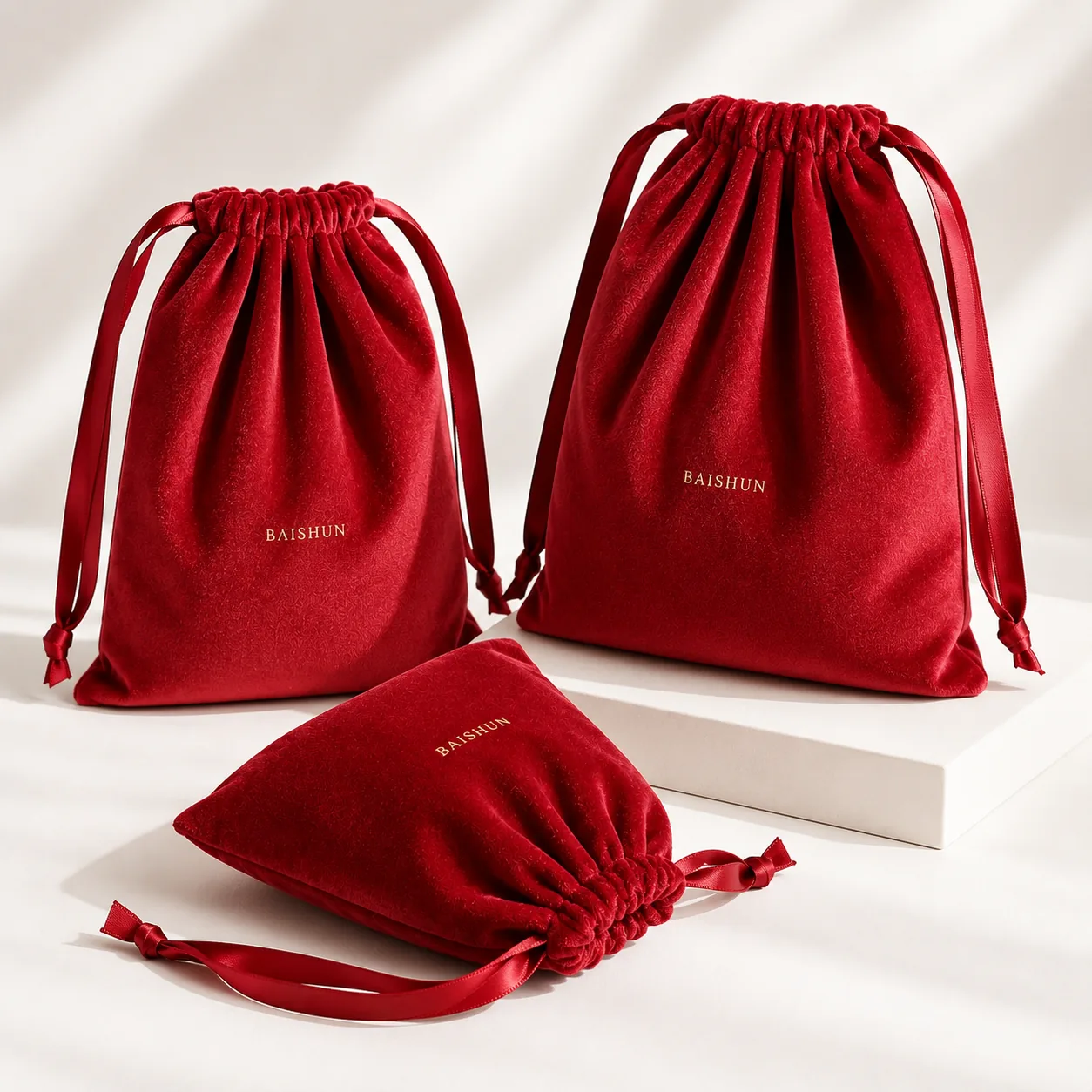


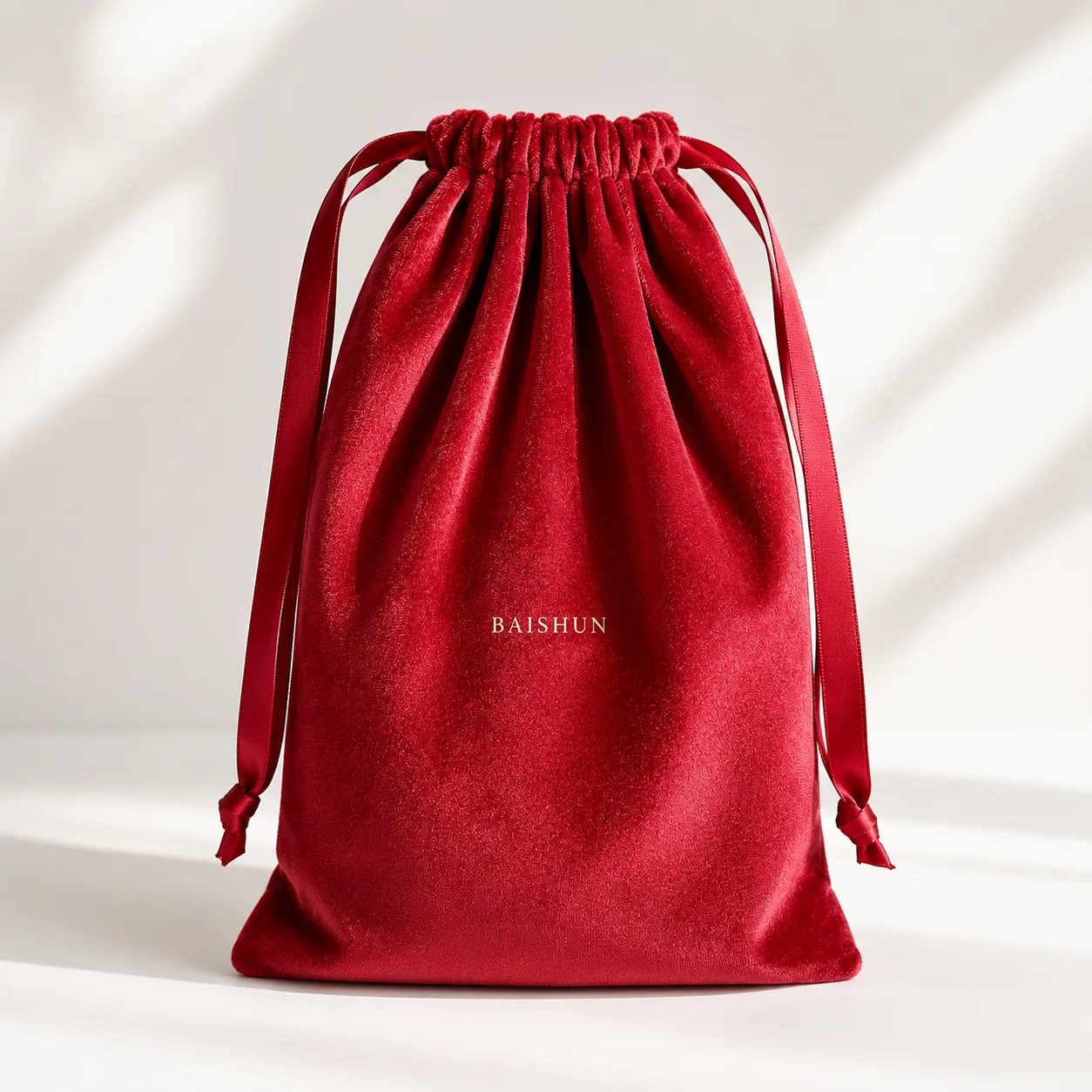
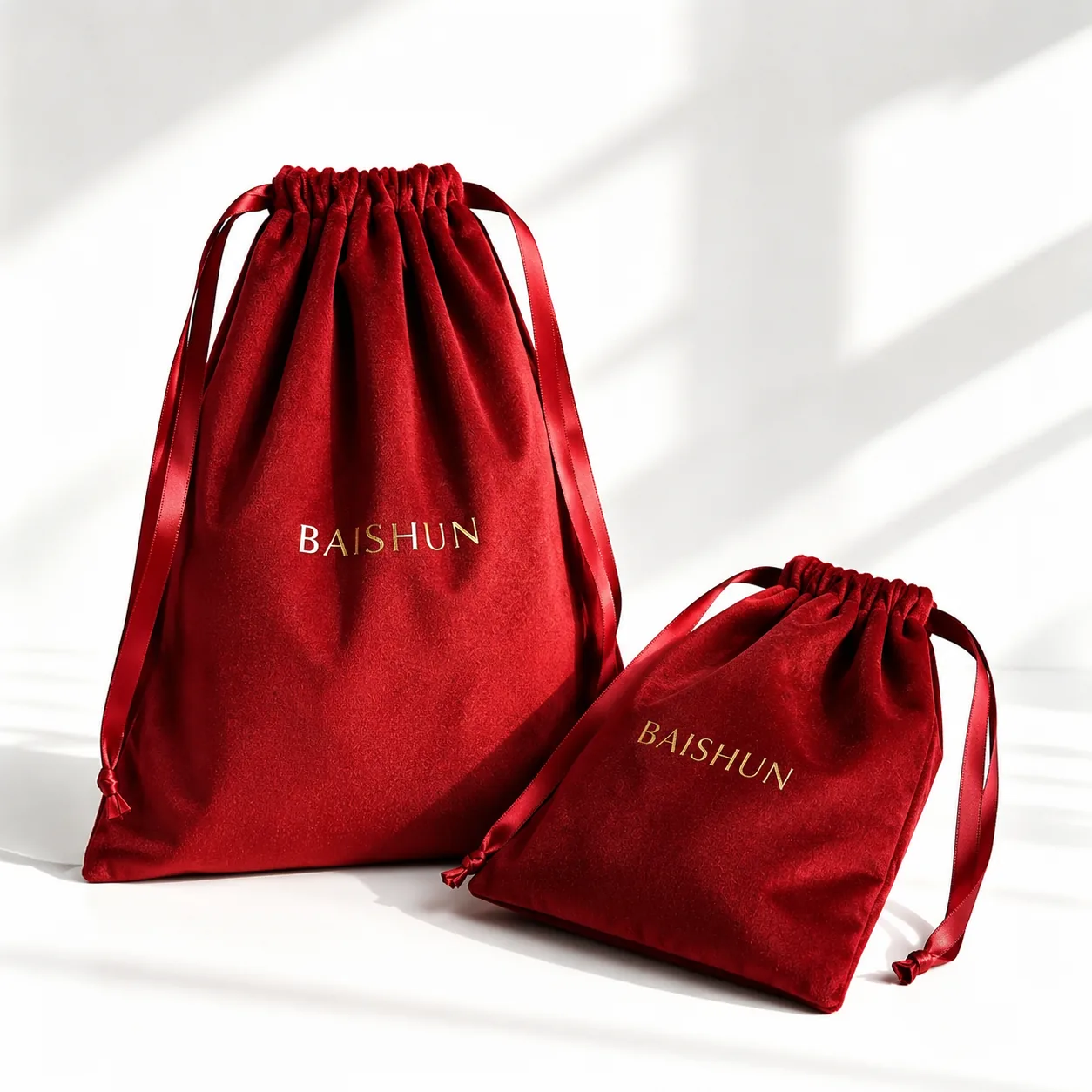
The base of the velvet range
This is the standard velvet drawstring construction and the widest colour family in the catalogue. The pattern and closure are settled, which is exactly why the colour range can run this deep — adding a colour is a fabric decision rather than a development one.
For a brand running product variants, seasonal editions, or a range that needs to look like a family, this is the practical base: one approved construction, colour as the only variable.
Velvet colour is not a screen decision
Velvet is a pile fabric, which means the same pouch reads as two different shades depending on which way the nap runs, and shifts again between daylight and retail lighting. No amount of care in photography changes that.
Approve a physical swatch under the lighting the product will sell in, with the pile running the production direction. For a multi-colour programme, approve the set together — colours that each look right alone can sit badly as a range.
What velvet does in transit
Pile crushes. Pouches packed tight under weight in bulk cartons can arrive with flattened patches, and how well the pile recovers varies between fabrics.
If the programme ships in bulk rather than individually protected, raise it at sampling so the fabric and the packing method are checked together rather than separately. It is a solvable problem, but only if it is specified before production.
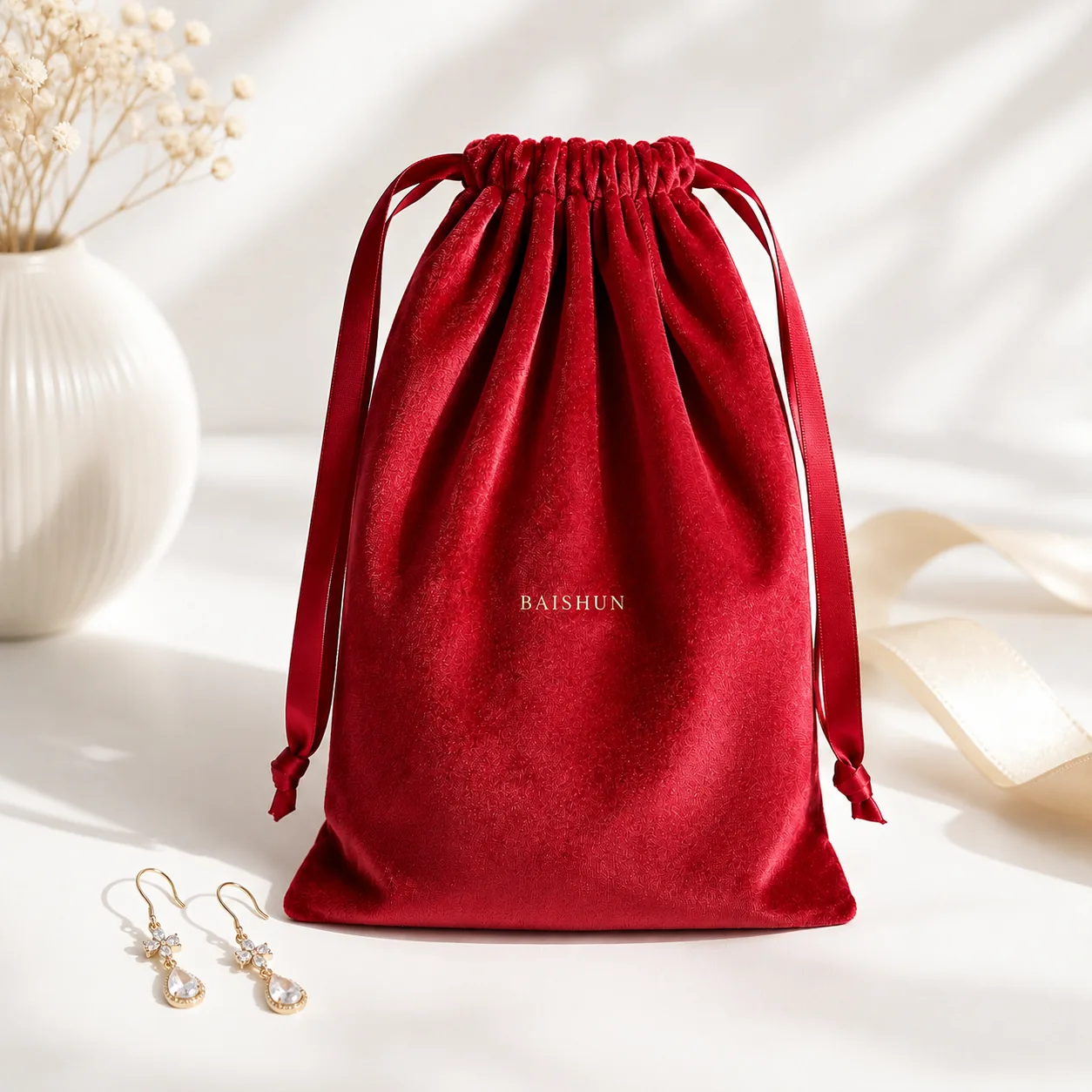
Source This Exact Reference: VEL-019
Reference identity. Ask for “Red Velvet-Look Drawstring Pouch” and include SKU VEL-019. The published gallery displays 6 views, so the sales team can separate this photograph from similar velvet bags.
Specification checkpoint. Published reference fields are Product Type: Drawstring Pouch; Material: Suede-Feel Fabric; Closure: Drawstring; Applications: Gift, Jewelry. Confirm pile and hand feel, contact surface, cord or ribbon, internal size and logo method before sampling.
Comparable quote input. Send the item dimensions, order quantity, destination, artwork and target use with the SKU. Pricing, MOQ and timing are confirmed against those inputs rather than inferred from the photograph.