The most adaptable construction
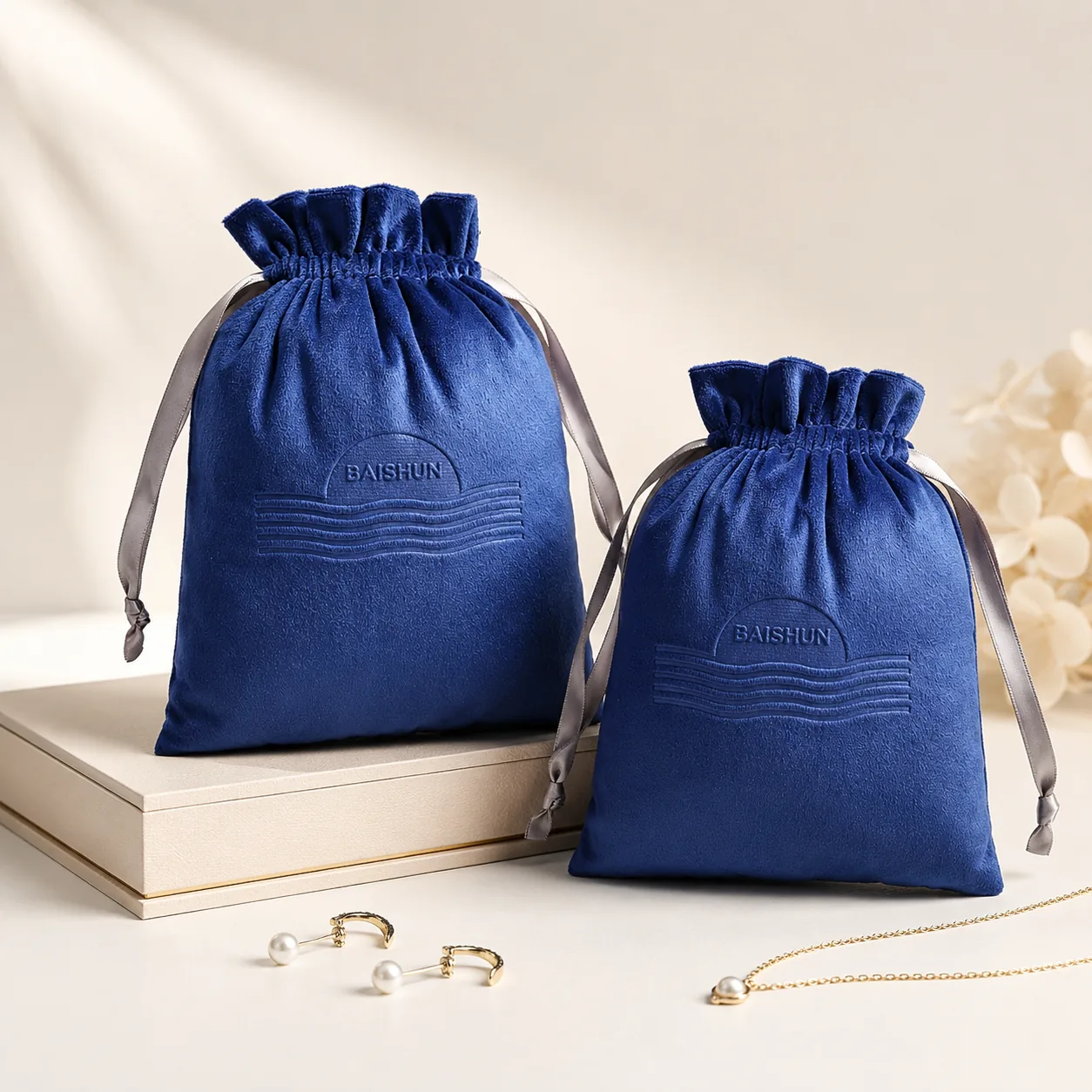
A drawstring pouch is the most forgiving format in fabric packaging — it accommodates contents that vary slightly, it reuses established patterns, and it is the fastest construction to move into production. Where a program needs several sizes or a wide colour range, this is usually the format that makes it practical.
How a ribbon drawstring closes
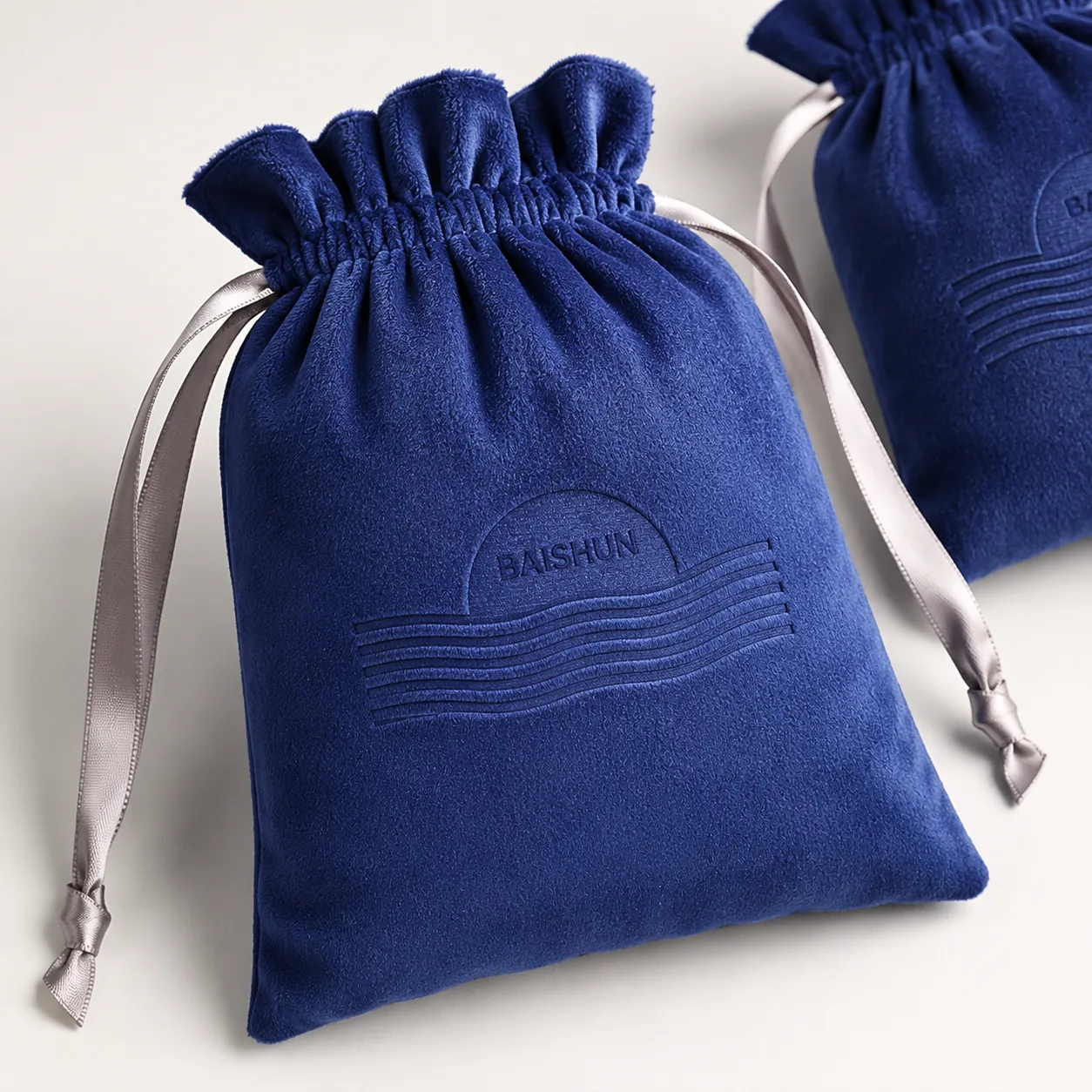
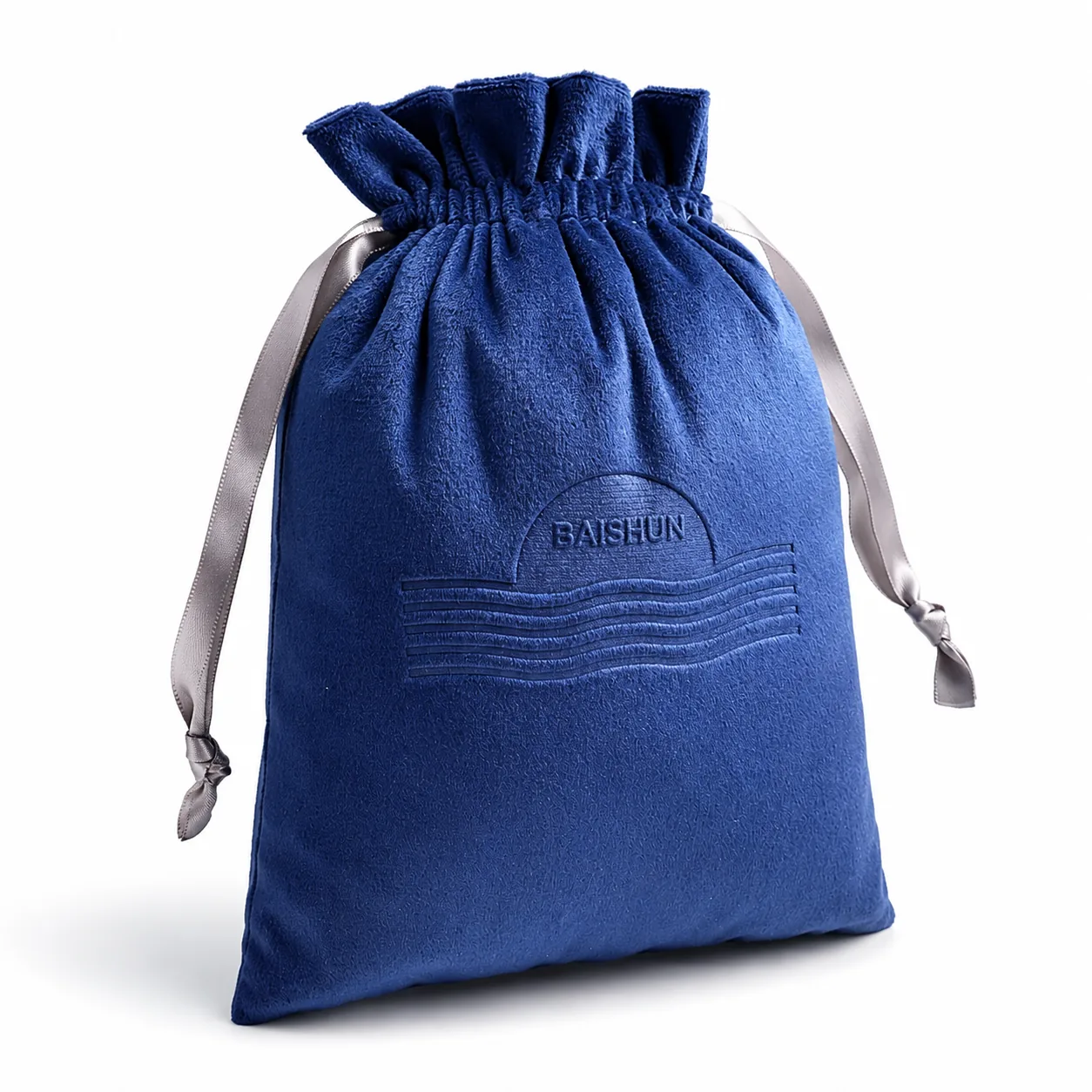
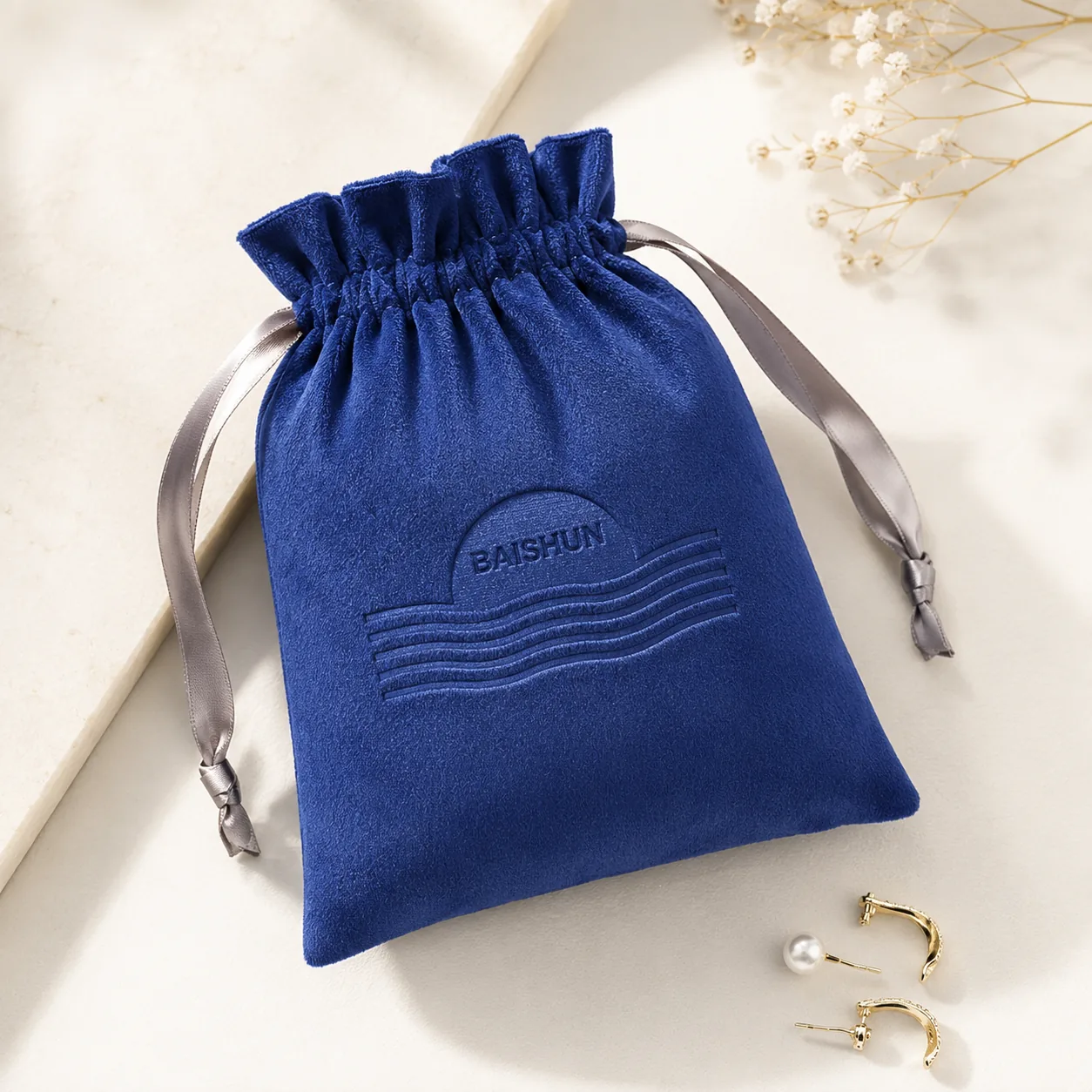
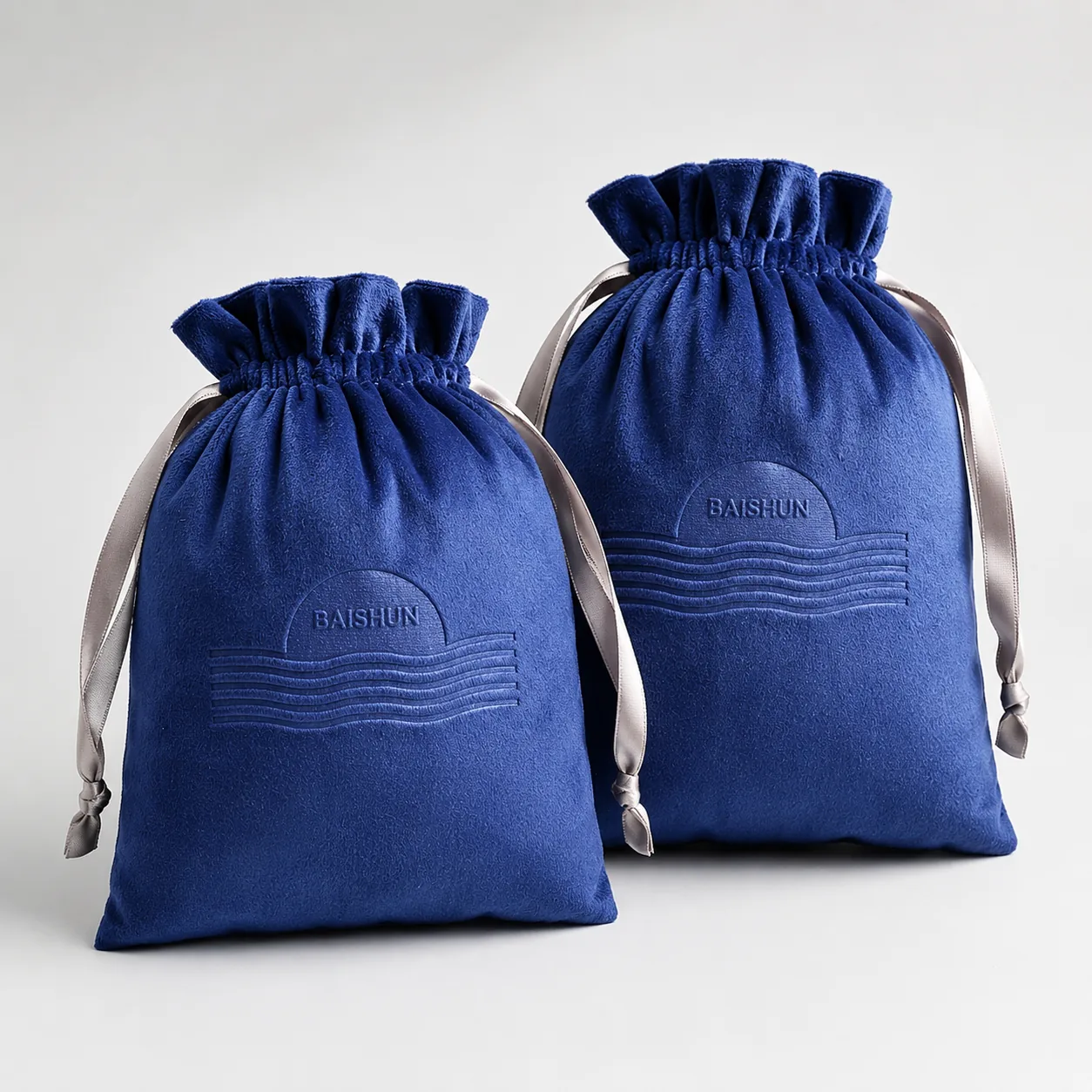
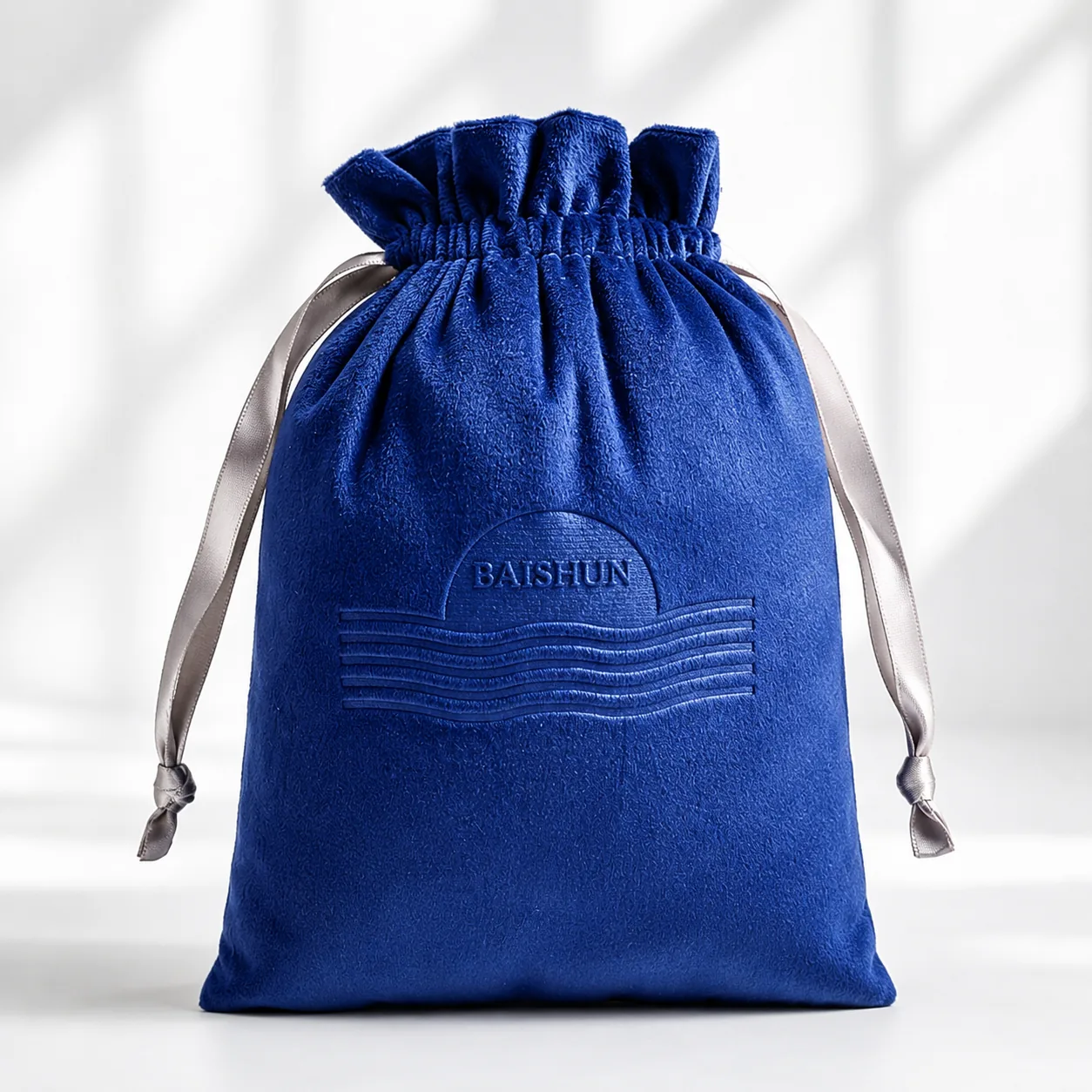
Flat ribbon in place of round cord changes both the look and the handling. It lies flatter against the pouch, ties into a bow that holds its shape, and reads as more finished than a cord for gift and retail presentation. It also slides differently — a wide ribbon needs a channel sized for it, and it will not run as freely as cord through a narrow one.
Confirm ribbon width against channel width on the sample, and check that the bow still sits square when the pouch is packed.
Embossed rather than printed
An embossed mark is pressed into the pile rather than sitting on top of it, so it carries no ink and cannot crack, scuff or lift with handling. On a pile fabric the mark reads through light and shadow, which means it looks strongest where the pouch catches directional light and nearly disappears in flat lighting — worth judging on a physical sample under the lighting the product will actually sell in. Because the effect is topographic, it favours solid shapes and generous line weights over fine detail.
The fabric
The suede-feel surface is dense, short-pile and low-lint, which is why it is used where the fabric is in constant contact with polished metal, stones or lenses. It debosses cleanly and takes foil well. Colour shifts with pile direction, so approve a physical swatch with the nap running the production direction rather than judging from a photograph.


