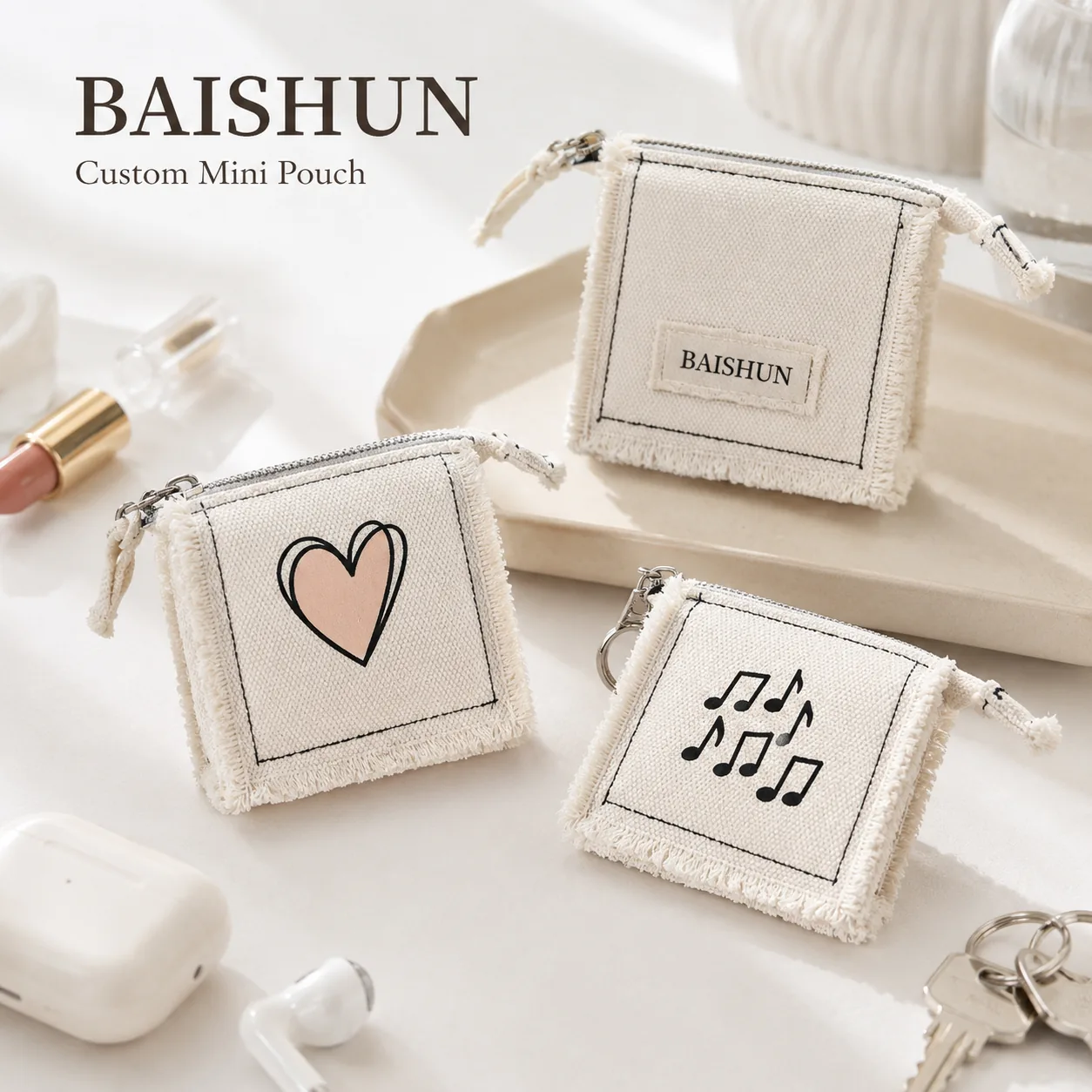
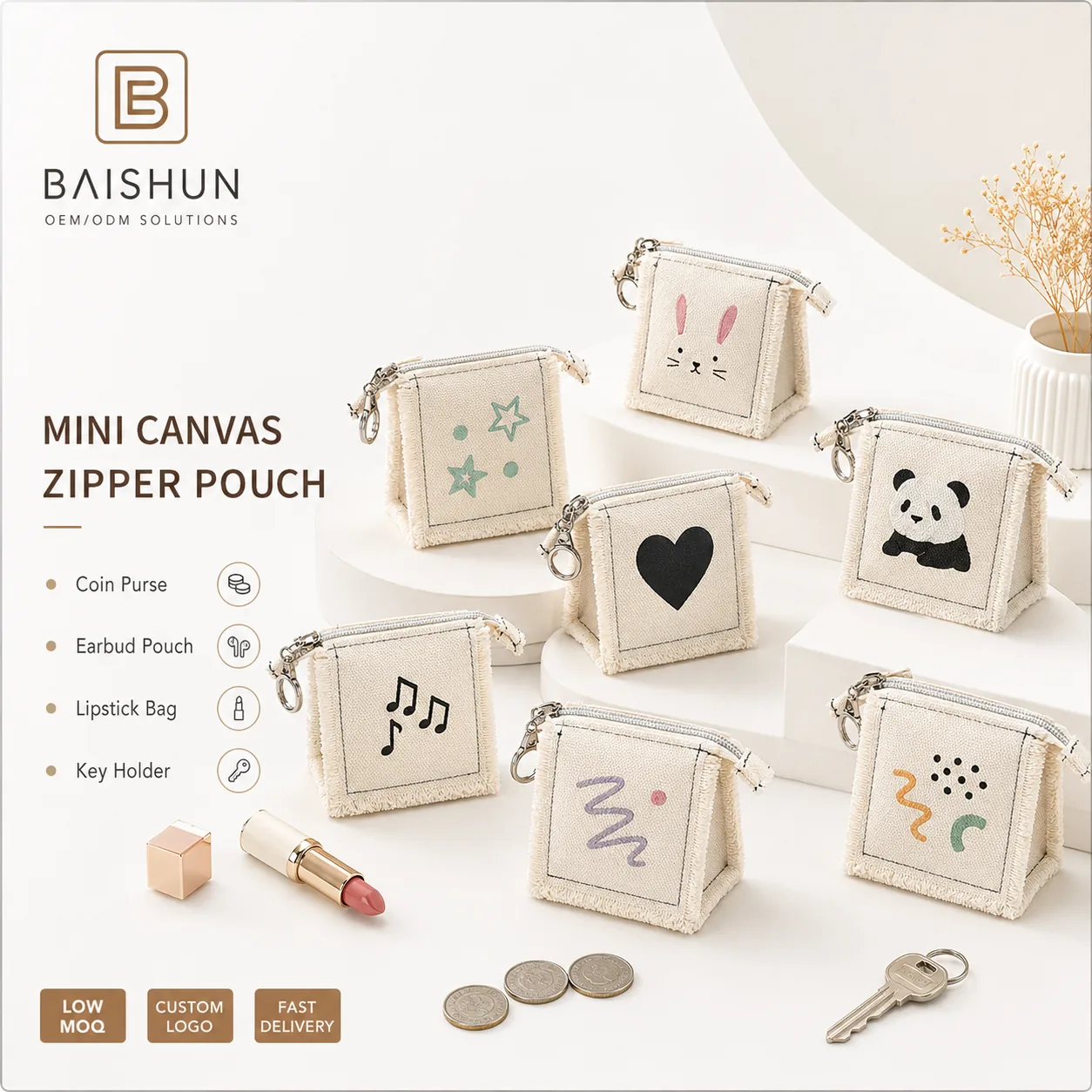
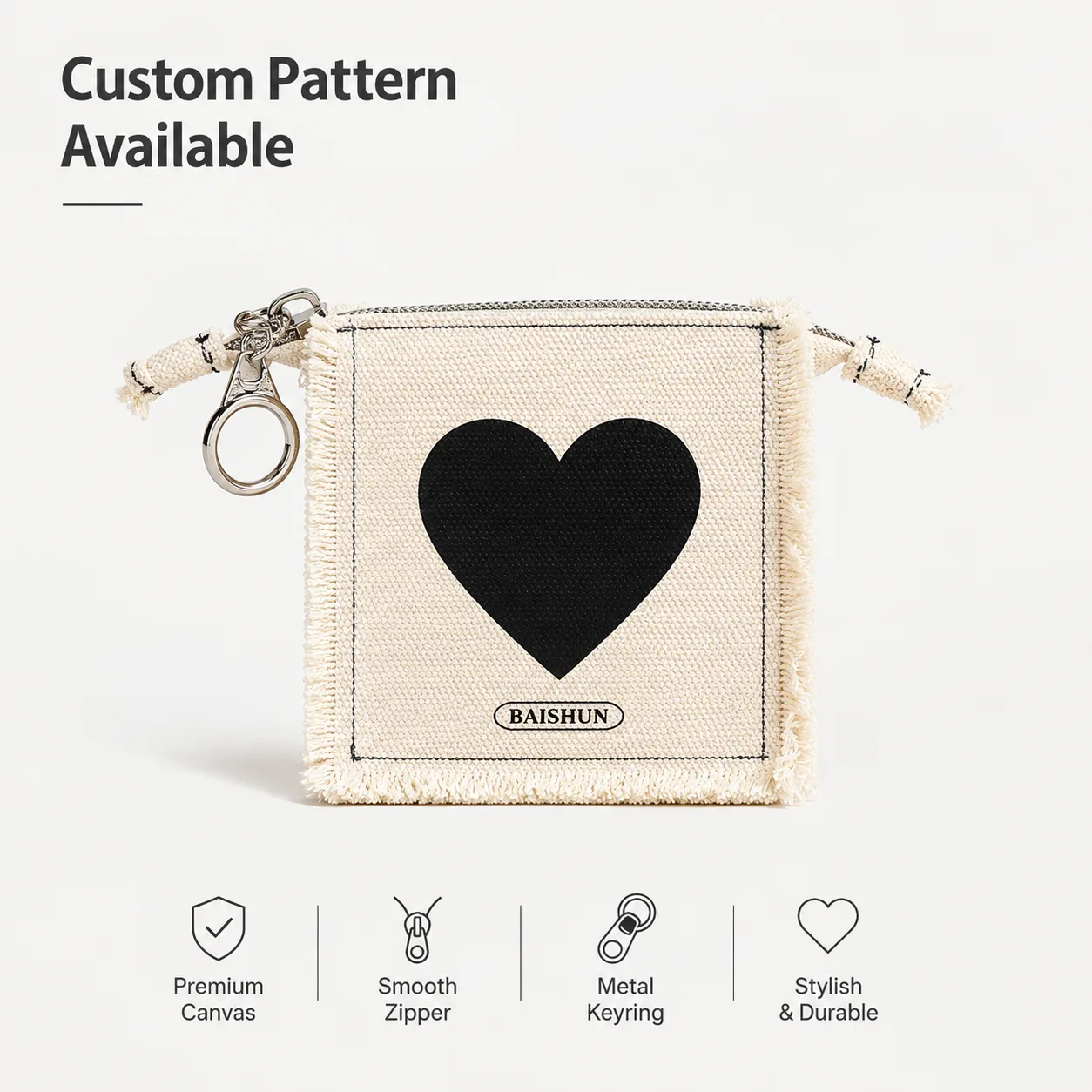
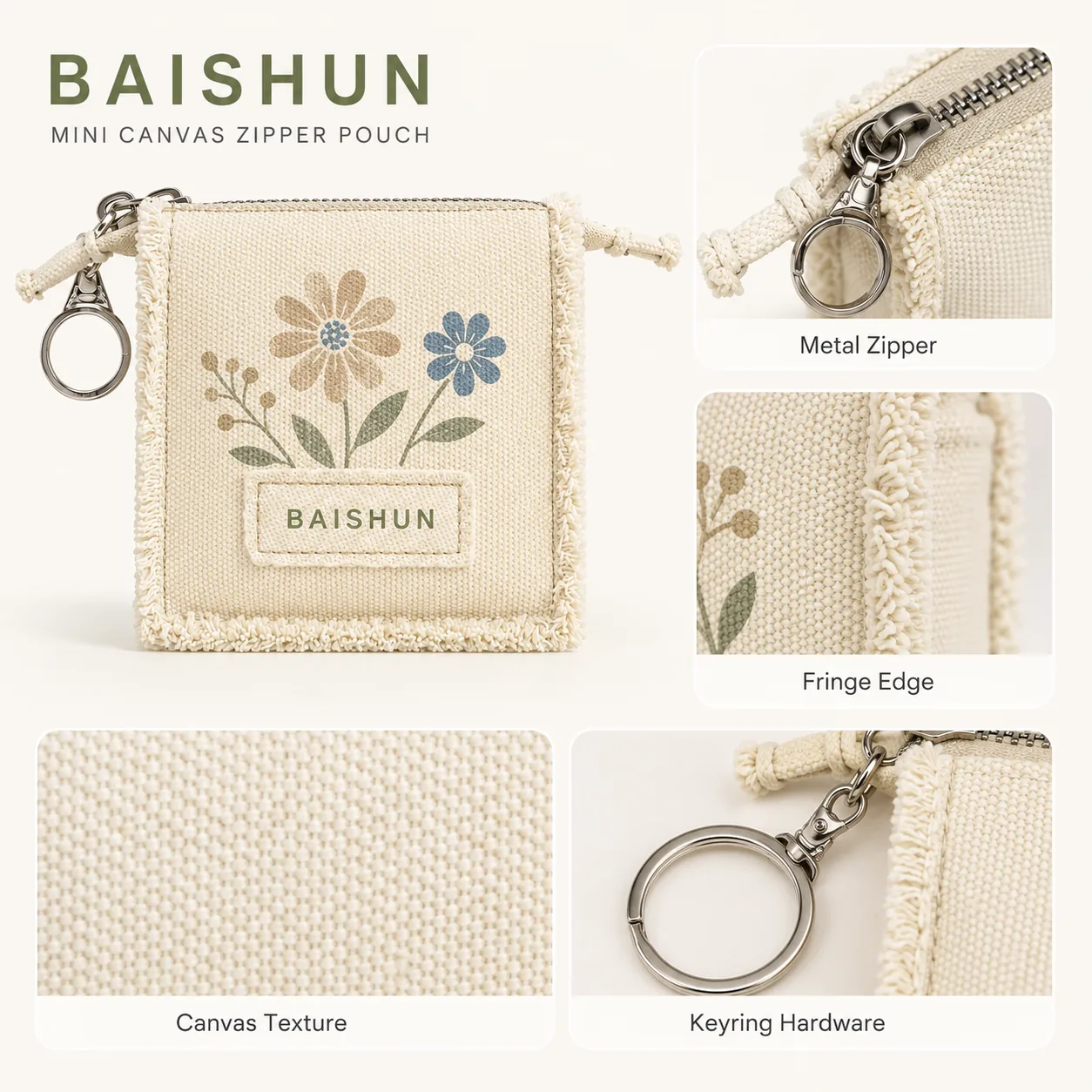
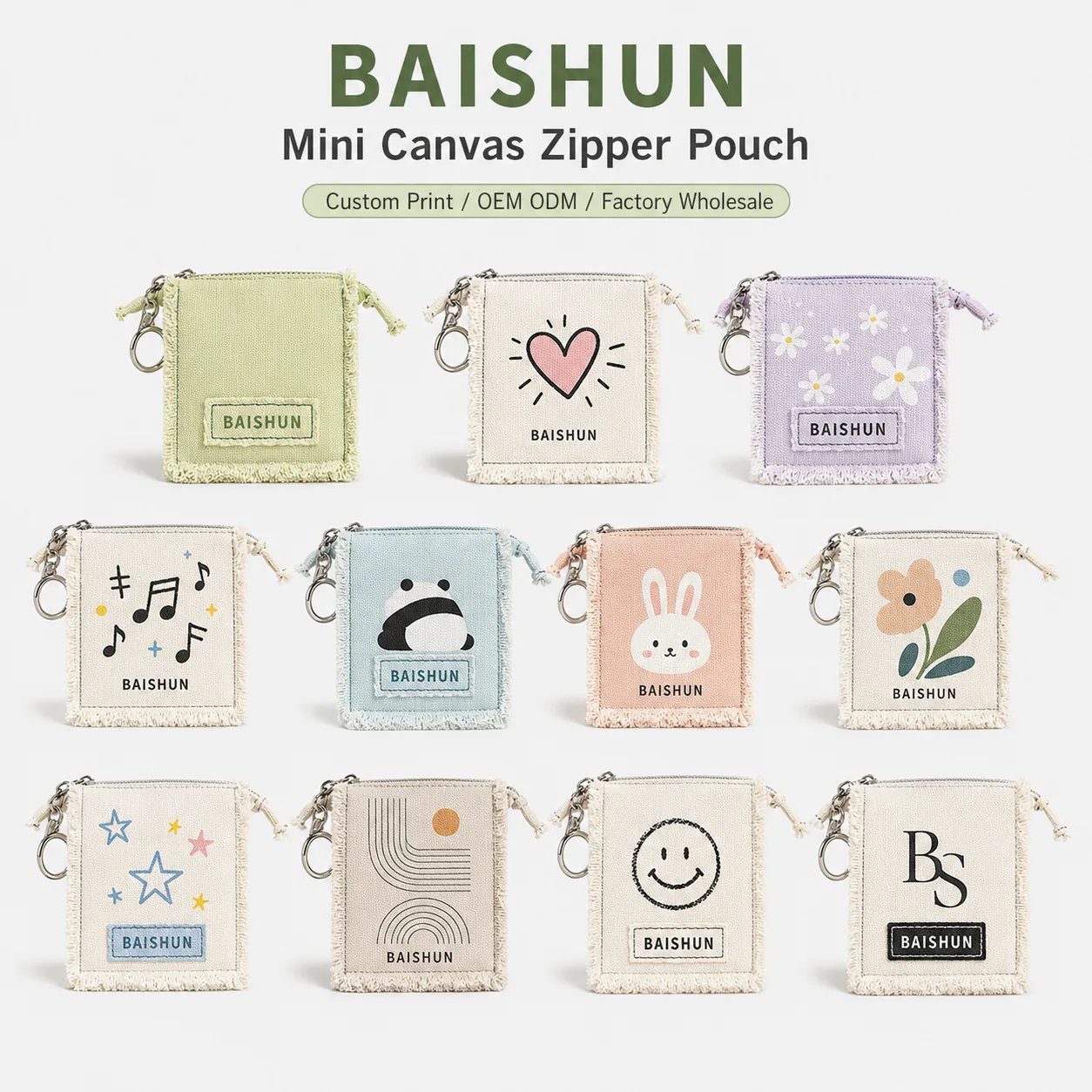
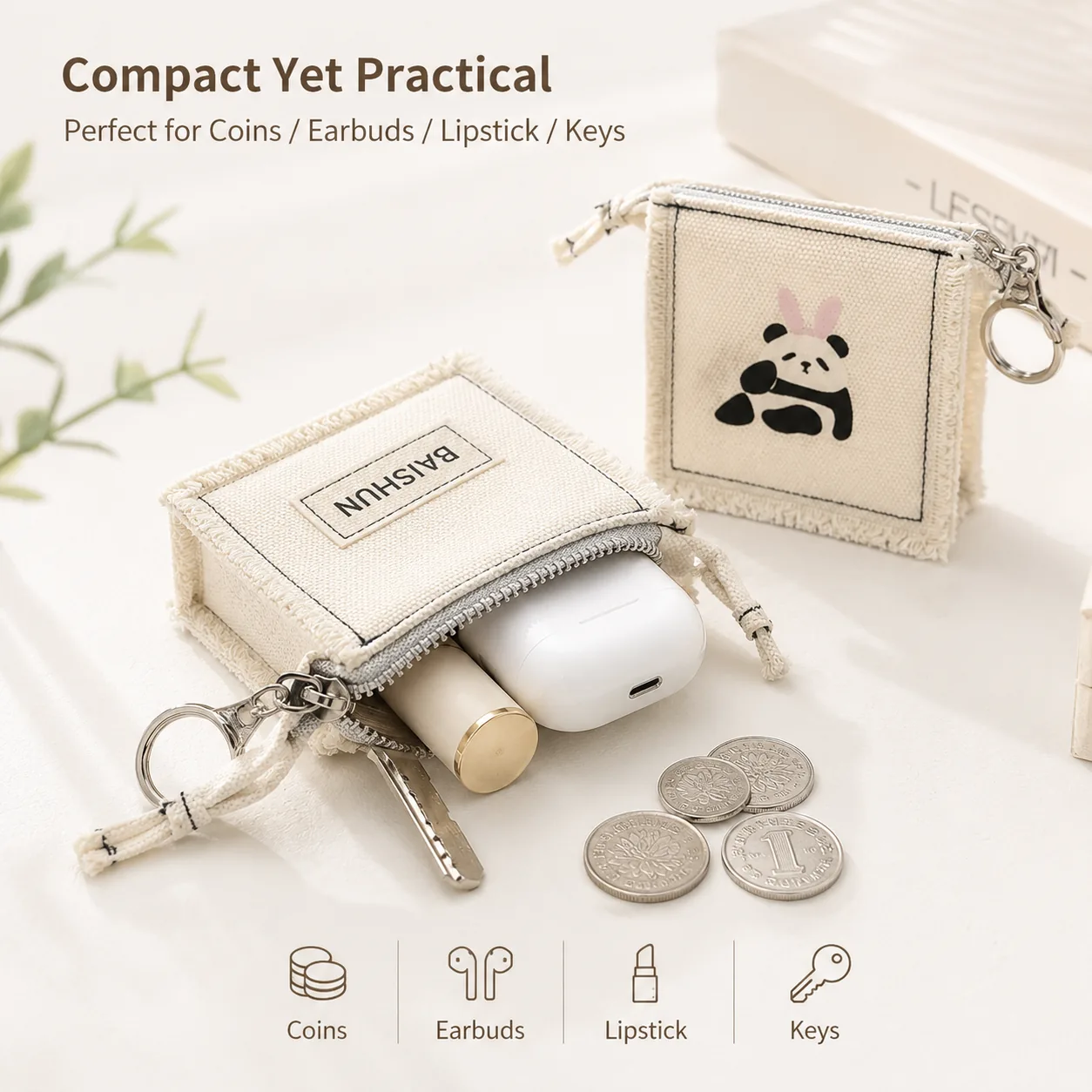
Sized to be carried on something else
A keychain pouch is specified from the ring or clip as much as from the contents: the attachment point takes the whole load every time it swings, so it is reinforced differently from a seam that only holds the pouch closed. Confirm the attachment on a loaded sample, and state what it clips to so the hardware is sized for it.
How the zip performs in use
A zip contains contents properly and adds structure, which is why it is the closure specified wherever small items would otherwise escape. It is also the component most exposed to wear: the tape, the slider and the pull are three separate quality decisions, and a cheap zip undermines an otherwise good pouch faster than any other single part.
Run the zip repeatedly on a packed sample. Smoothness under load, and whether the slider wanders off the tape at the ends, are not visible in a photograph.
Repeat or placed motif on pile fabric
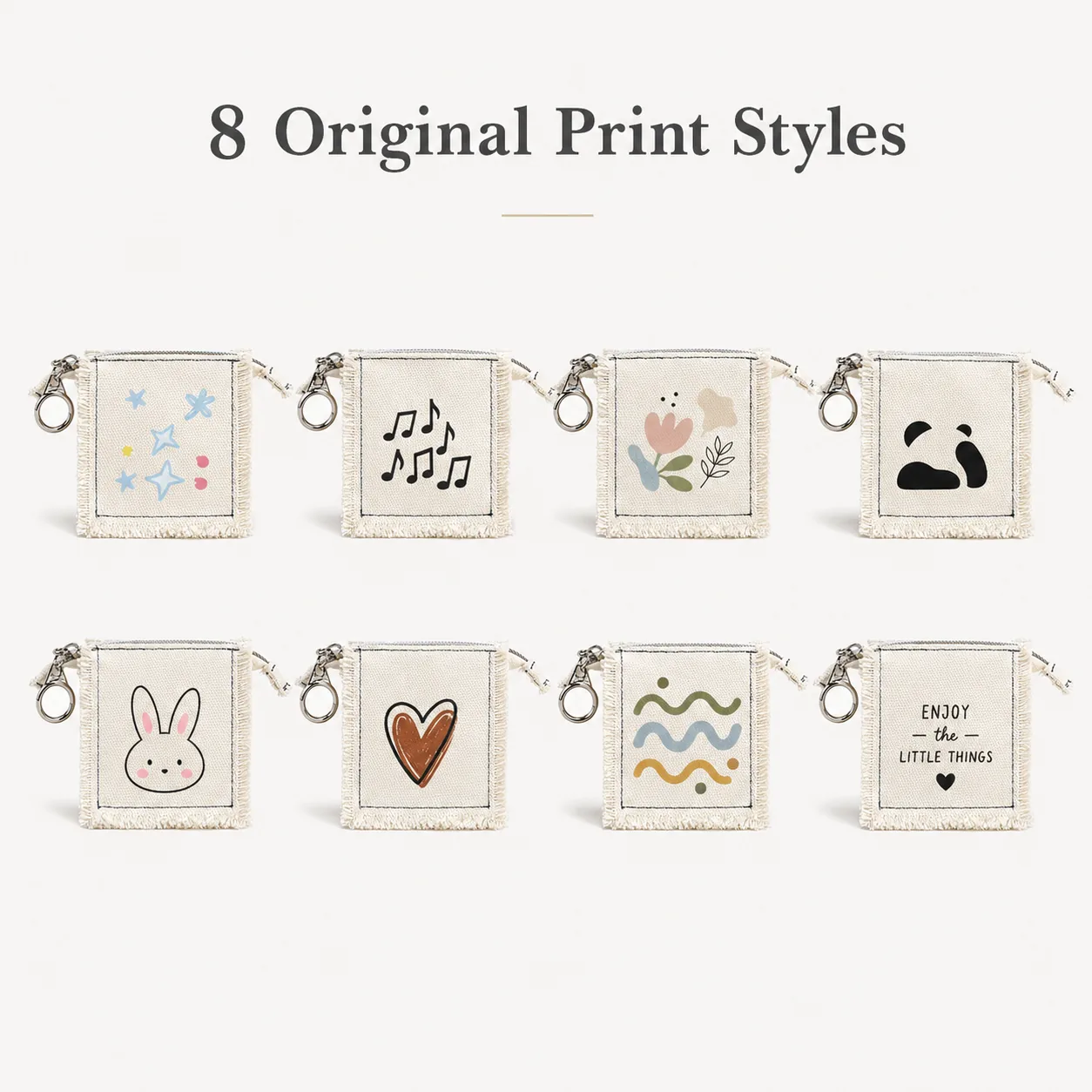
A motif changes what the buyer is approving. Beyond colour, the decisions are scale, placement and repeat: a motif sized against a flat artboard frequently reads too large or too busy once it is on a made pouch with a gathered top. Pile fabric also softens edges slightly, so fine line work loses definition that it keeps on a smooth surface. Approve the motif on the production fabric at production size rather than from artwork.
The fabric
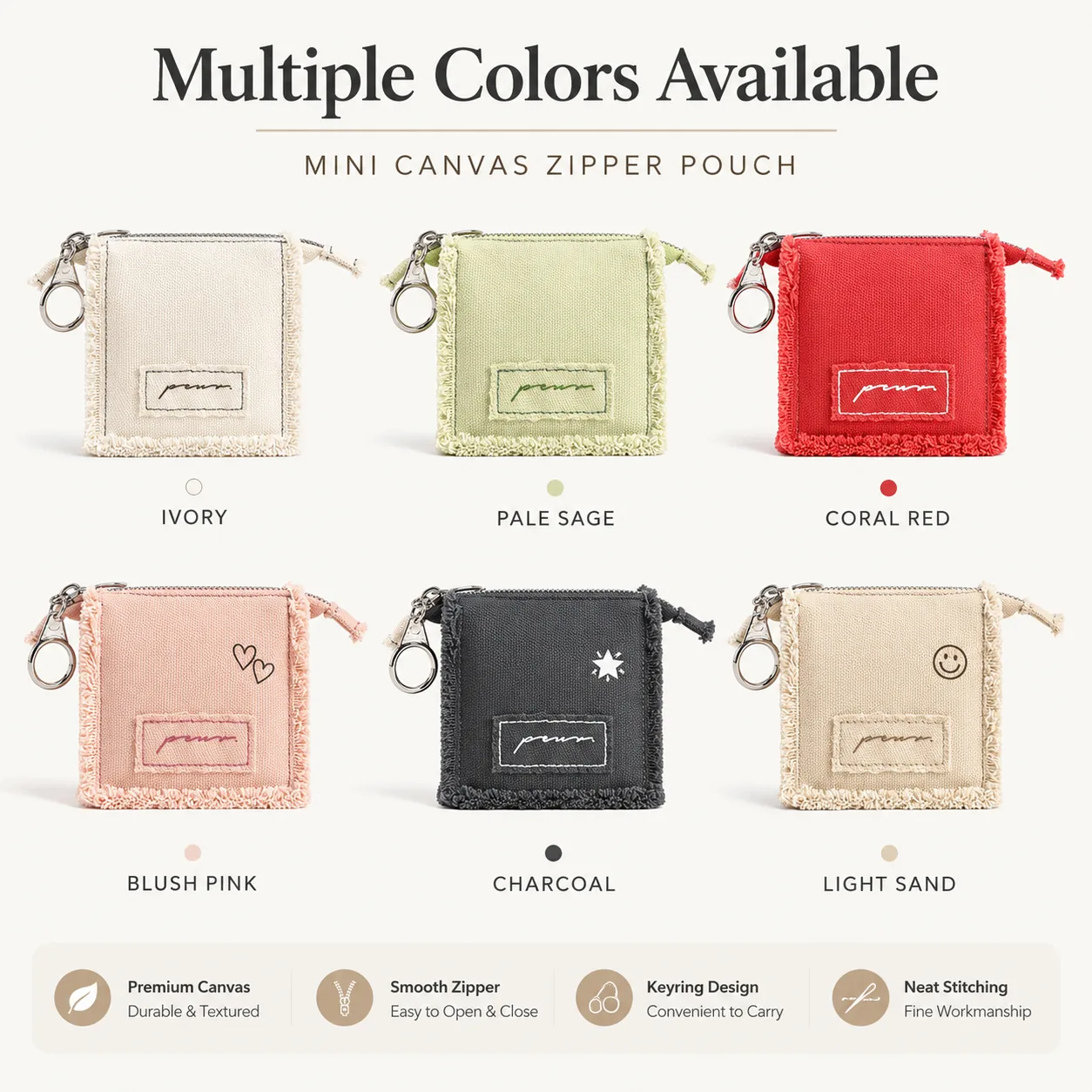
Cotton canvas carries load and holds structure, and it is the best print surface here — silk screen for spot colours, heat transfer for multi-colour artwork. Fabric weight is specified from the heaviest expected contents rather than chosen by look.


