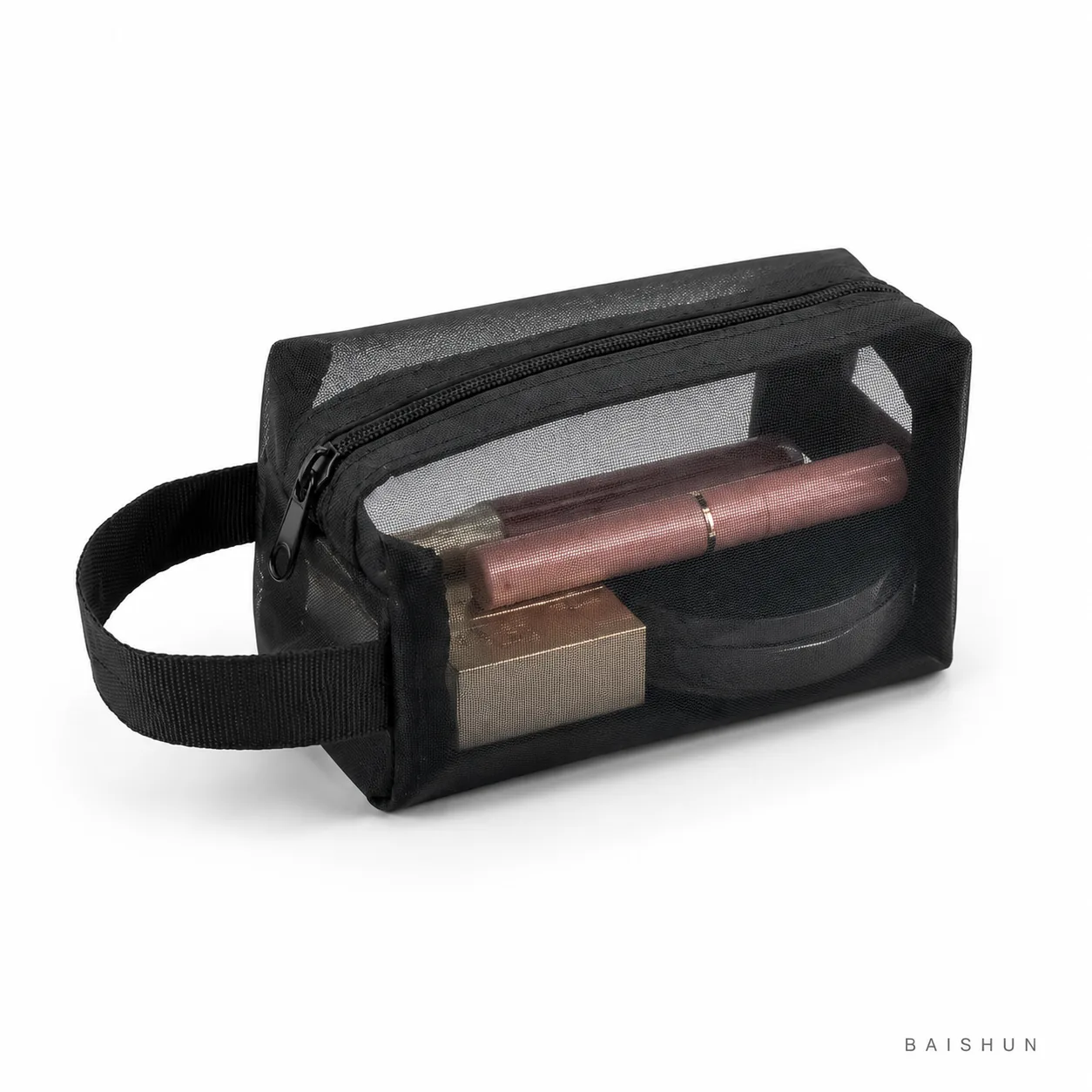
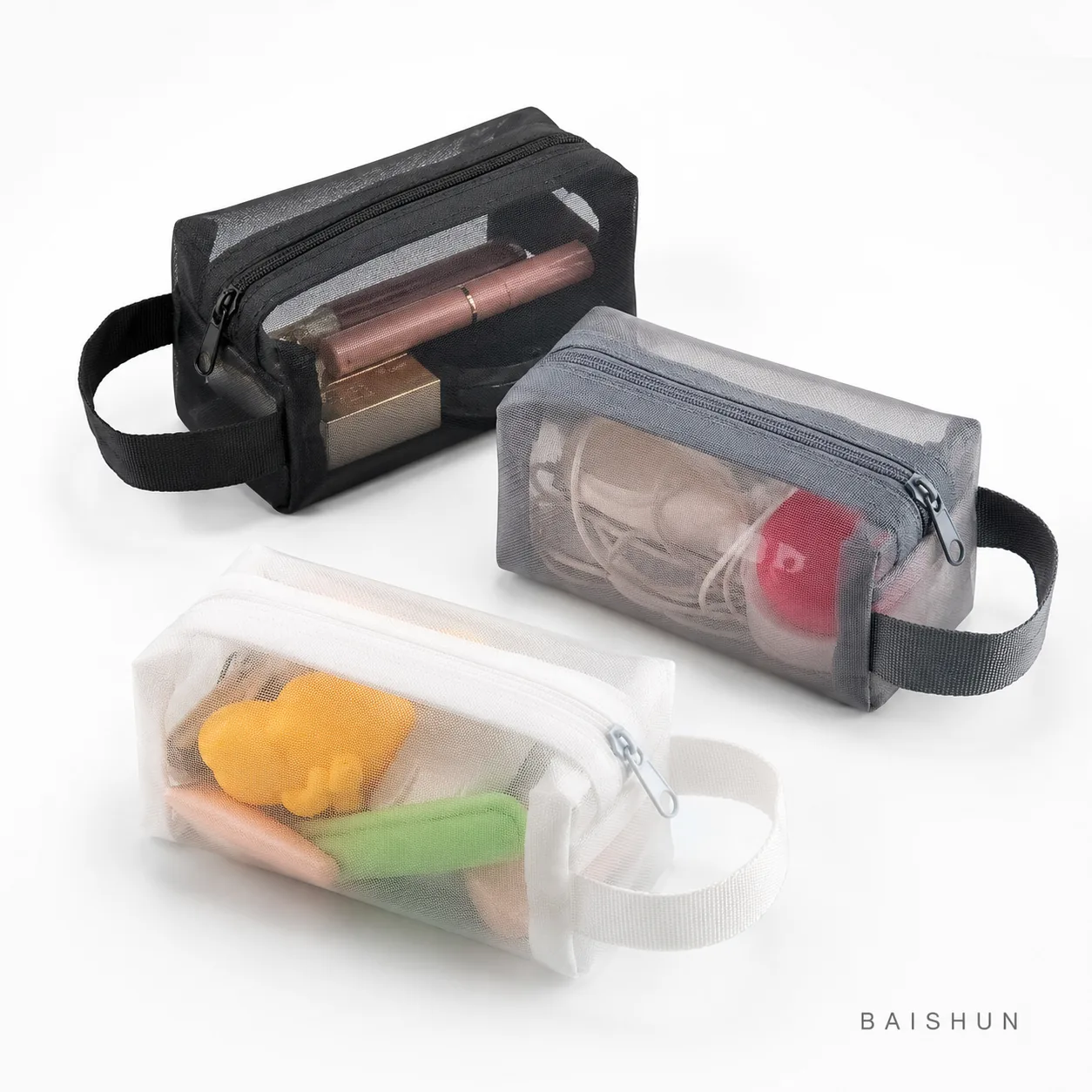
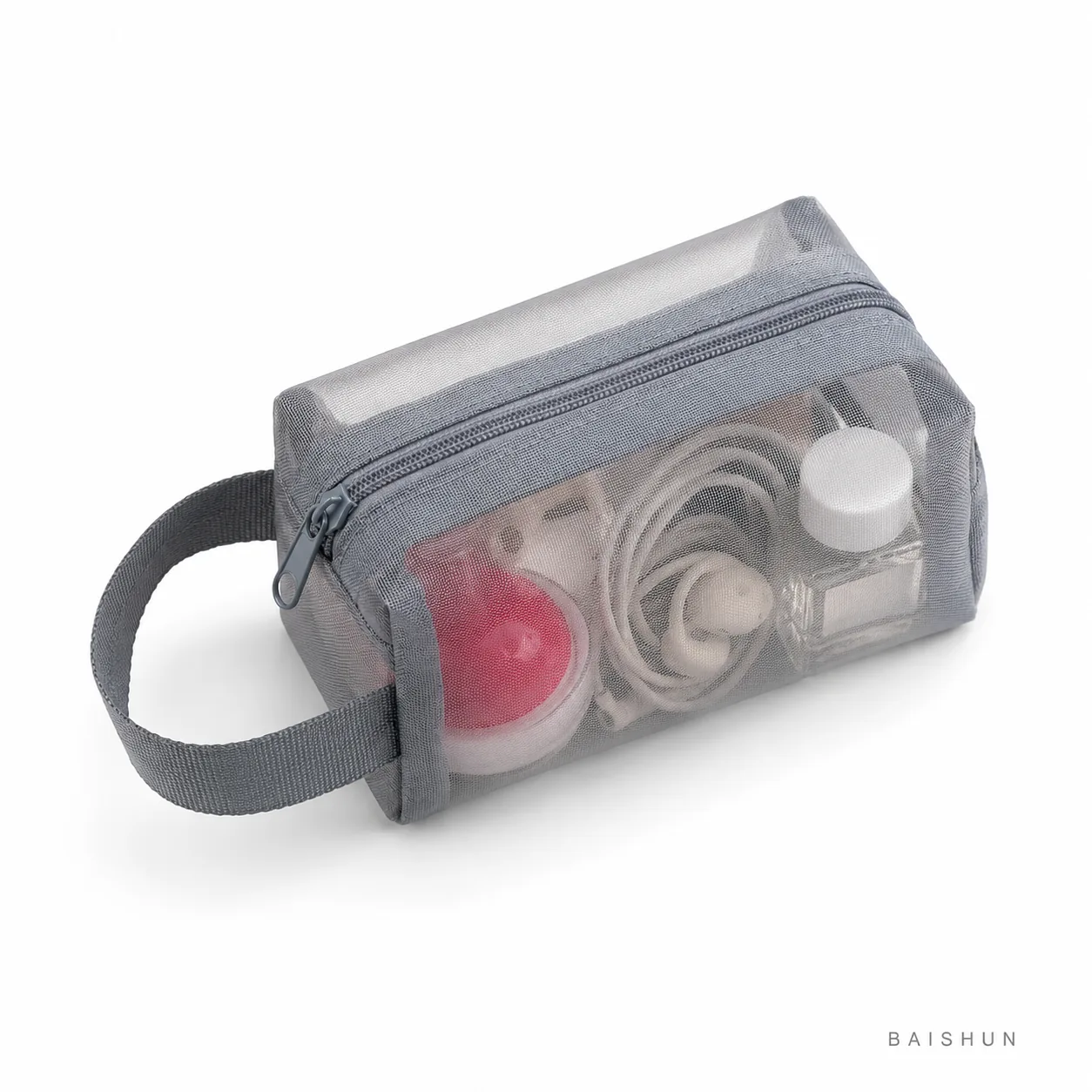
A see-through construction
A clear panel changes what the pouch is for: contents are identifiable without opening it, which suits travel, organisation and retail display. Clear film behaves differently from fabric — it creases rather than draping, it shows every seam, and it becomes brittle at low temperature. Confirm the film gauge and how it is bound at the edges, since that join is where a clear pouch usually fails.
How the zip performs in use
A zip contains contents properly and adds structure, which is why it is the closure specified wherever small items would otherwise escape. It is also the component most exposed to wear: the tape, the slider and the pull are three separate quality decisions, and a cheap zip undermines an otherwise good pouch faster than any other single part.
Run the zip repeatedly on a packed sample. Smoothness under load, and whether the slider wanders off the tape at the ends, are not visible in a photograph.
The fabric
A clear panel makes contents identifiable without opening the pouch. Film gauge decides whether it feels substantial or flimsy, and the bound edge where film meets fabric is where this construction usually fails. Film also creases permanently rather than draping, so it shows handling in a way fabric does not.


