



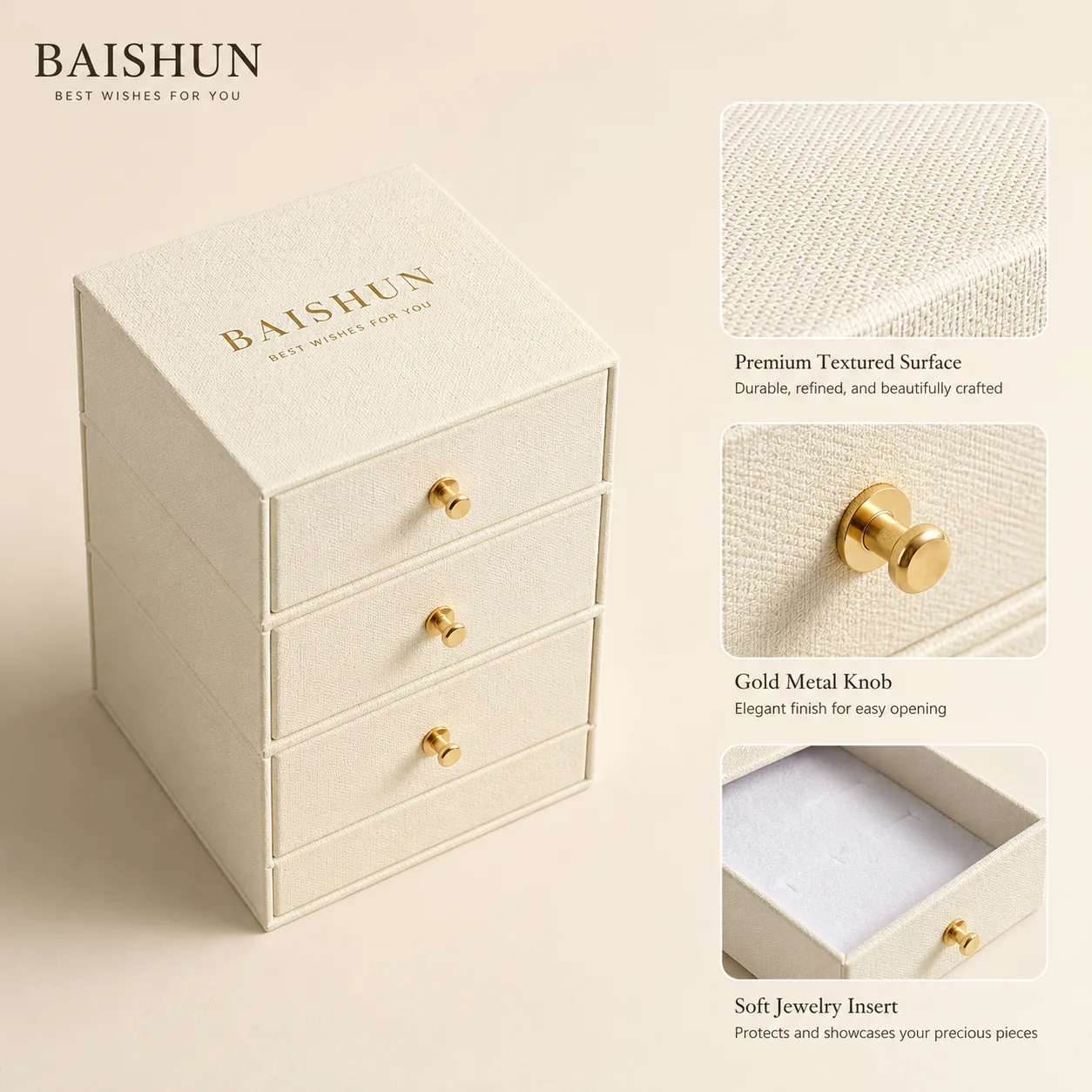

How a drawer box works
A drawer box is two components: an outer sleeve and an inner tray that slides. The fit between them is the whole product — too tight and it binds, too loose and it falls open in transit. That tolerance is set in the die, so it is confirmed on a physical sample rather than specified numerically, and it should be checked with the insert and product loaded.
How the drawer action works
The sliding fit between tray and sleeve is the product. Too tight and it binds or tears the wrap; too loose and it opens in transit. That tolerance is set in the die rather than written as a number, which makes the physical sample the only meaningful approval.
Test it loaded with the actual product and insert, not empty — weight changes how the tray runs.
The fabric
Board weight decides whether a rigid box holds its shape under stacking and how it survives transit. It also affects shipped volume, because a rigid box travels assembled unless it is designed to fold — which matters on a bulky, low-density product where freight is a large share of landed cost.
Source This Exact Reference: BOX-007
Reference identity. Ask for “Metal-Pull Multi-Drawer Jewelry Box” and include SKU BOX-007. The published gallery displays 6 views, so the sales team can separate this photograph from similar packaging boxes.
Specification checkpoint. Published reference fields are Product Type: Multi-Layer Drawer Jewelry Box; Material: Paperboard, Paper, Metal Handle; Closure: Drawer, Metal Handle; Applications: Jewelry Packaging, Gift Packaging; Available Variations: Multiple Colors, Multi-Layer Options. Confirm the product dimensions, insert layout, board and surface finish, opening style and artwork before sampling.
Comparable quote input. Send the item dimensions, order quantity, destination, artwork and target use with the SKU. Pricing, MOQ and timing are confirmed against those inputs rather than inferred from the photograph.