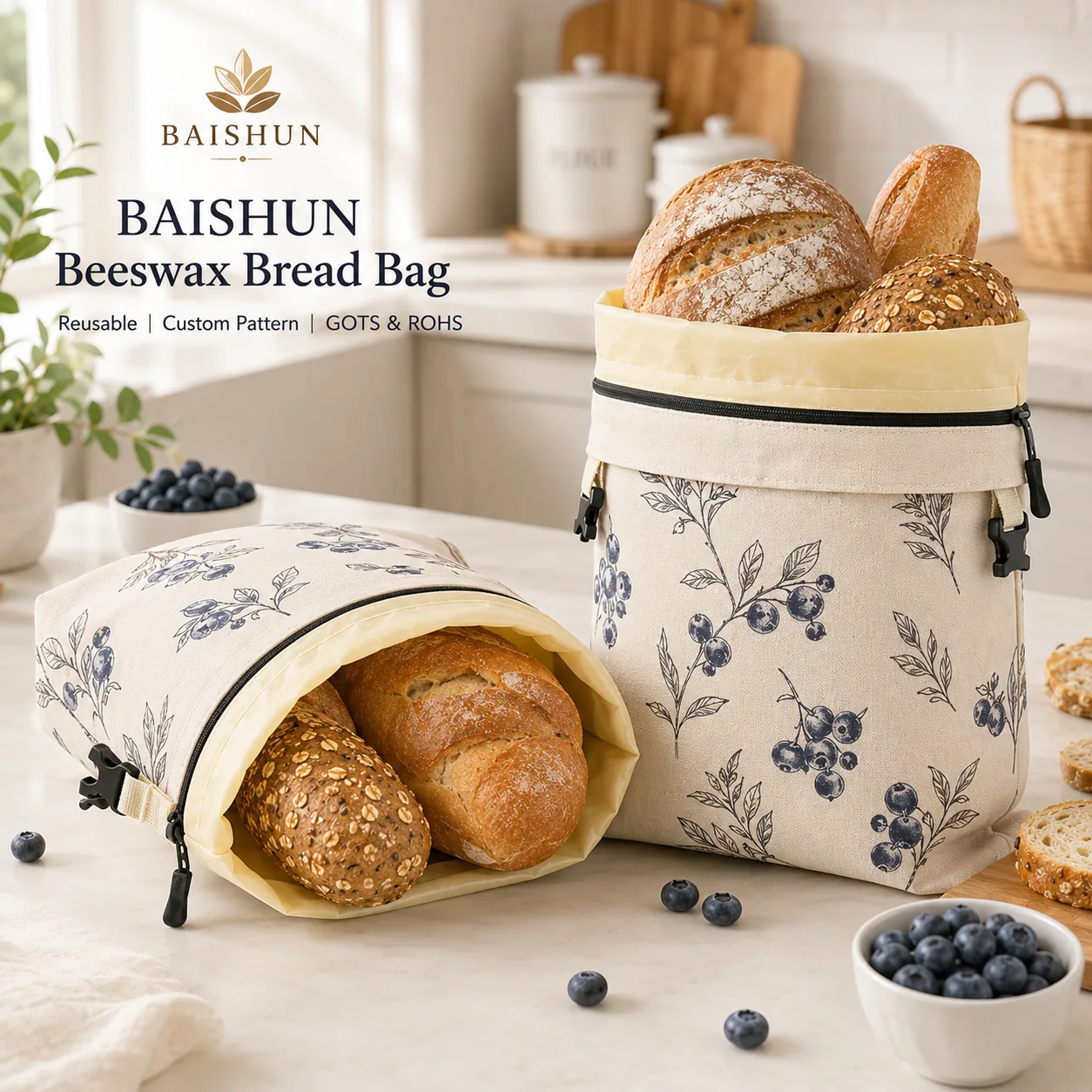
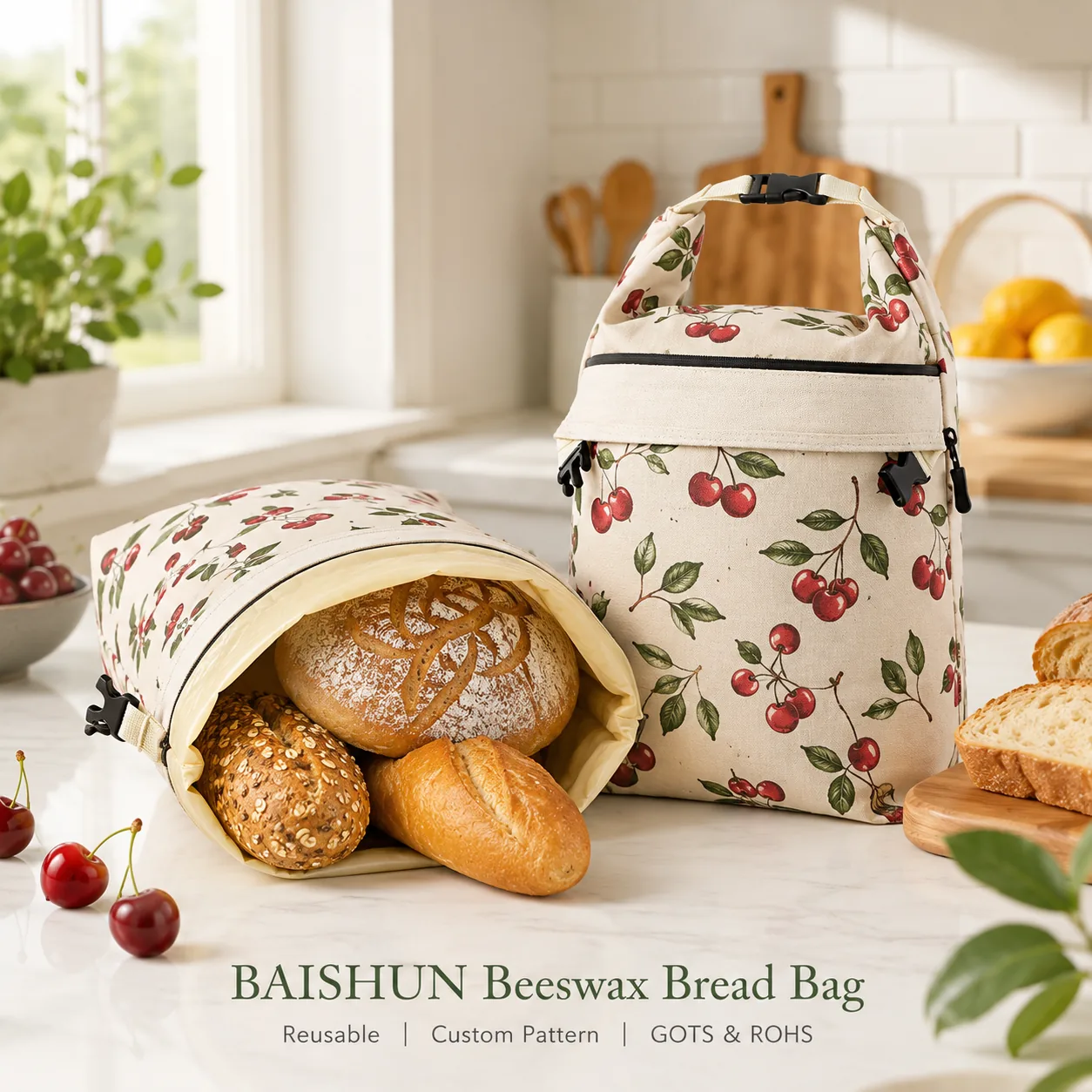
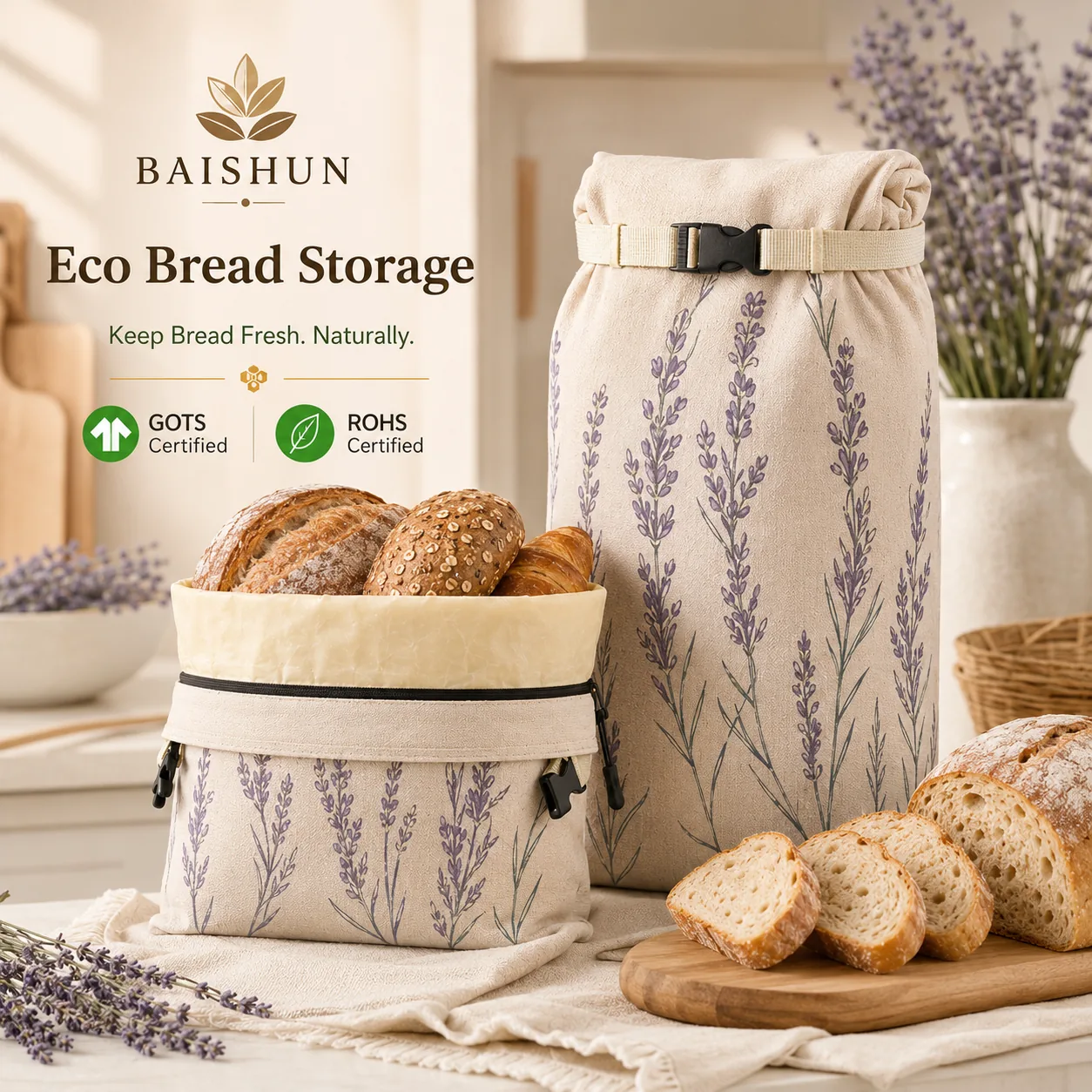
Built for a loaf, not for display
Bread packaging is specified from loaf dimensions and from how often the bag is opened. It has to close well enough to keep the loaf from drying, open easily enough for daily use, and survive repeated laundering — which makes fabric weight and seam construction more important here than surface finish. State whether the bag touches unwrapped bread, because that determines which material and documentation questions have to be answered for your market.
How the roll-top toggle closes
The mouth folds down over itself and a toggle or clip holds the fold. It closes more thoroughly than a drawstring, adjusts to contents of varying height, and reopens in one motion — which is why it suits bags opened daily rather than once. The fold consumes length, so the bag is cut taller than the contents by the number of turns required.
Check the fold holds with the bag part-full as well as full — a toggle set for a full bag can slip when the contents reduce.
Source This Exact Reference: BRD-001
Reference identity. Ask for “Printed Roll-Top Bread Storage Bag” and include SKU BRD-001. The published gallery contains 3 views, so the sales team can separate this photograph from similar bread bags.
Specification checkpoint. Published reference fields are Product Type: Roll-Top Bread Storage Bag; Closure: Roll-Top Toggle; Applications: Bread Storage, Food Storage; Available Variations: Multiple Print Designs, Multiple Sizes. Confirm the loaf or food-pack dimensions, fabric, wash expectation, closure and any destination-market documentation before sampling.
Comparable quote input. Send the item dimensions, order quantity, destination, artwork and target use with the SKU. Pricing, MOQ and timing are confirmed against those inputs rather than inferred from the photograph.