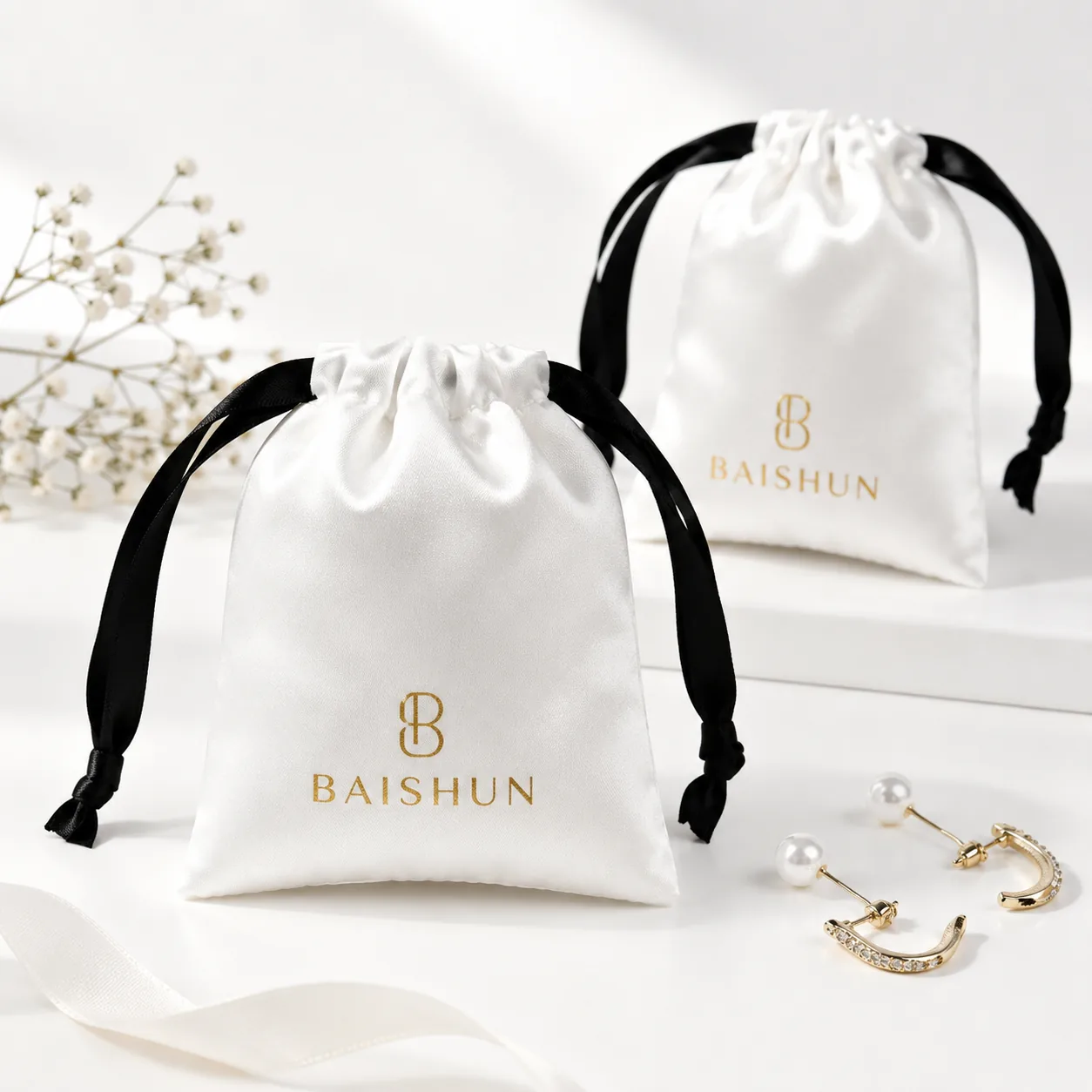
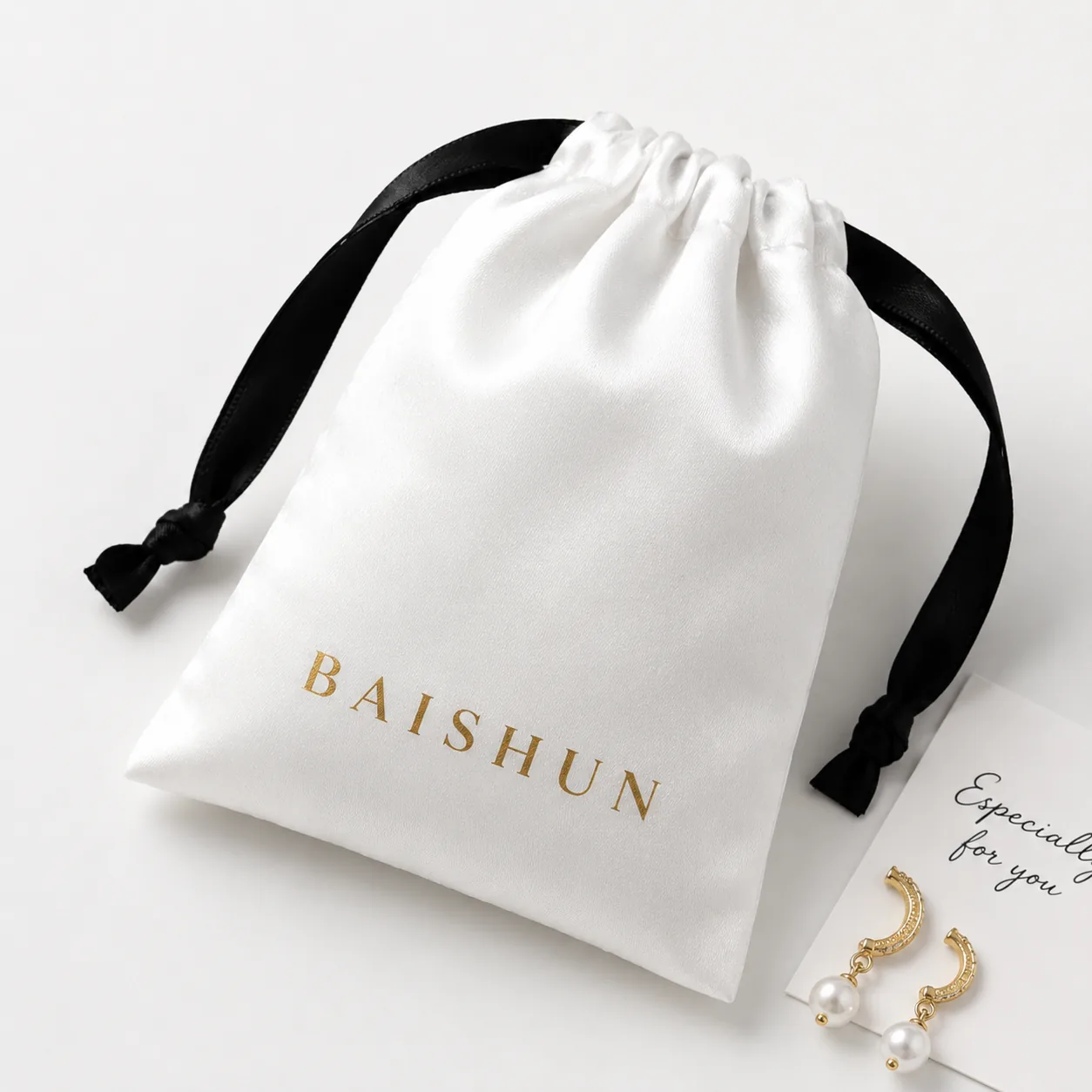
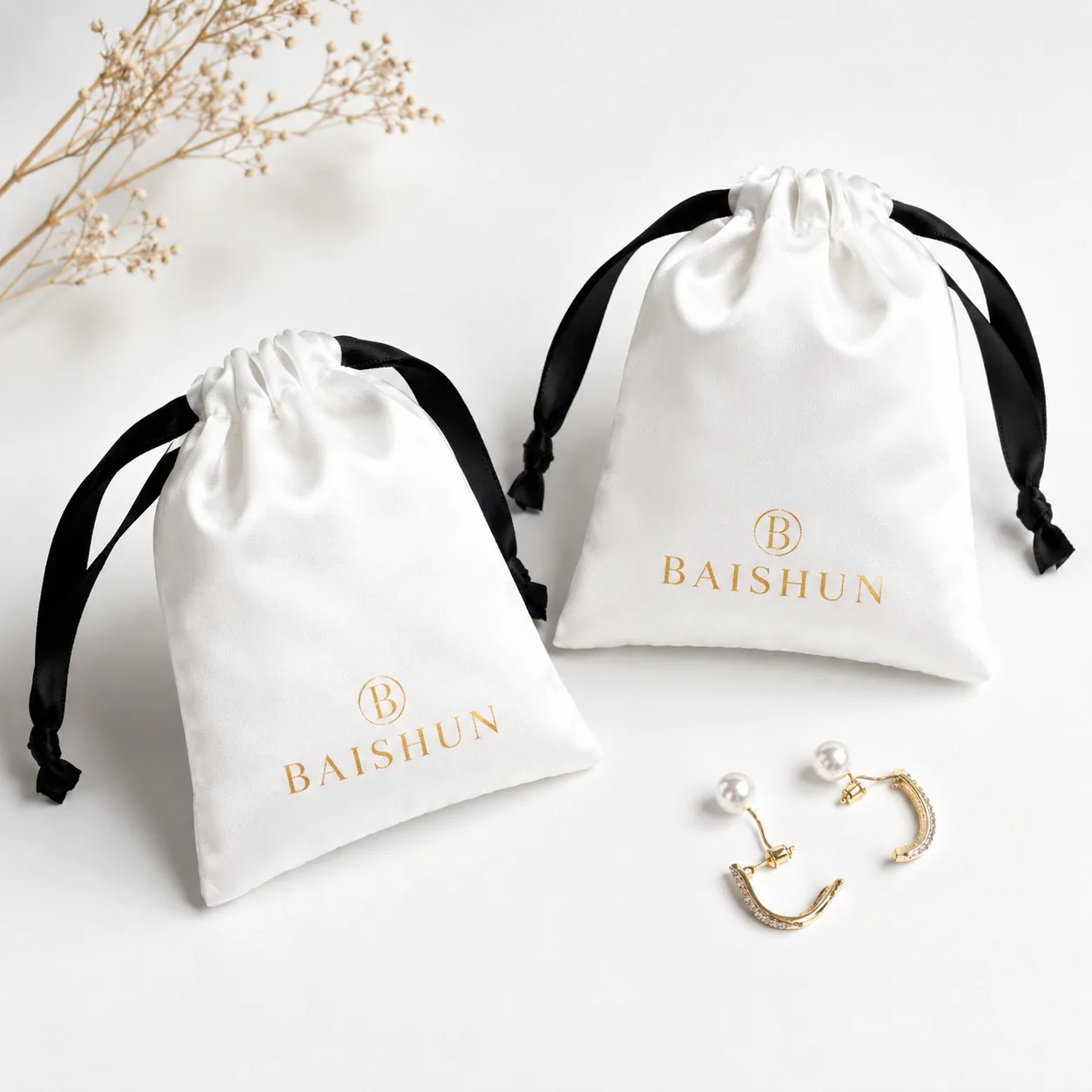
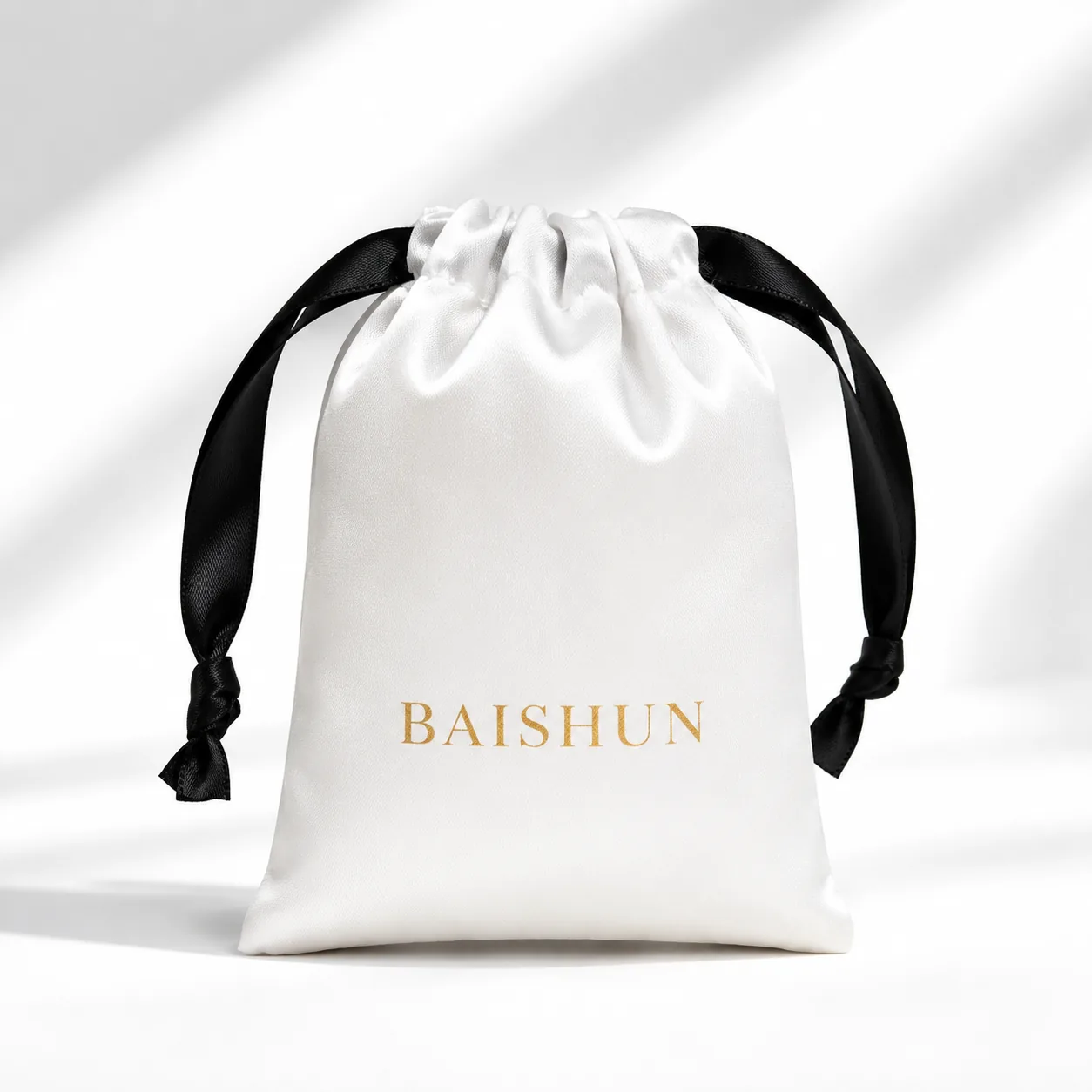
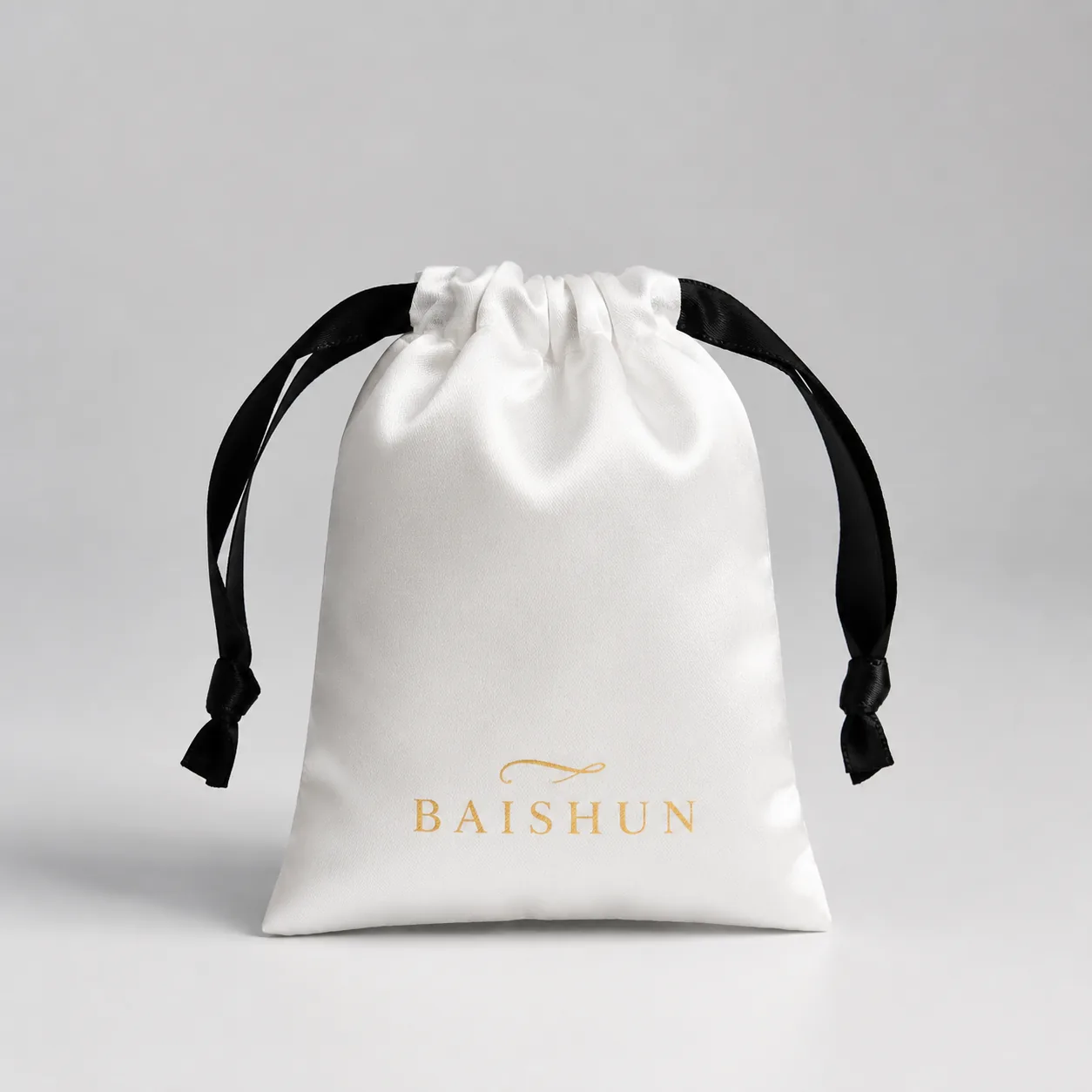
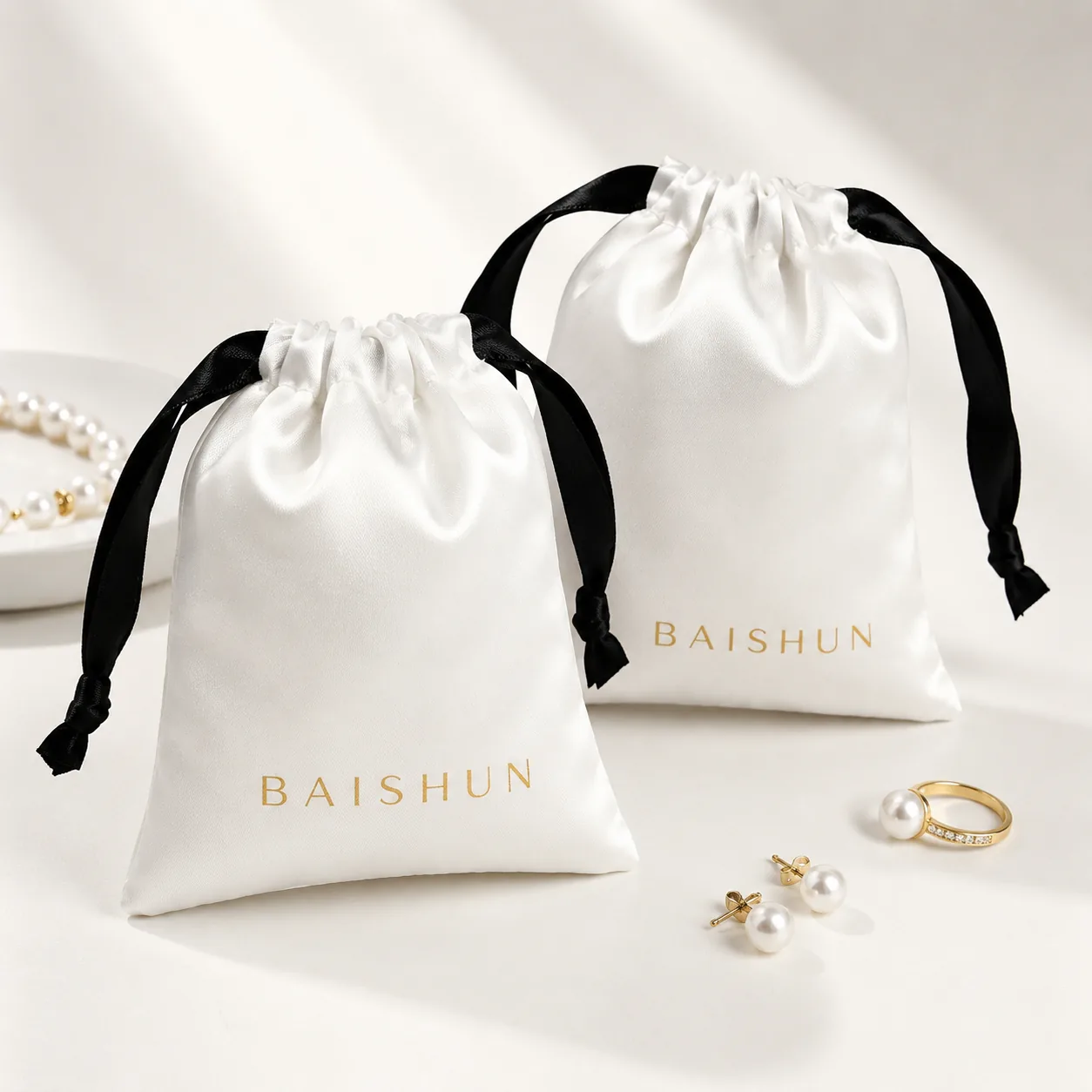
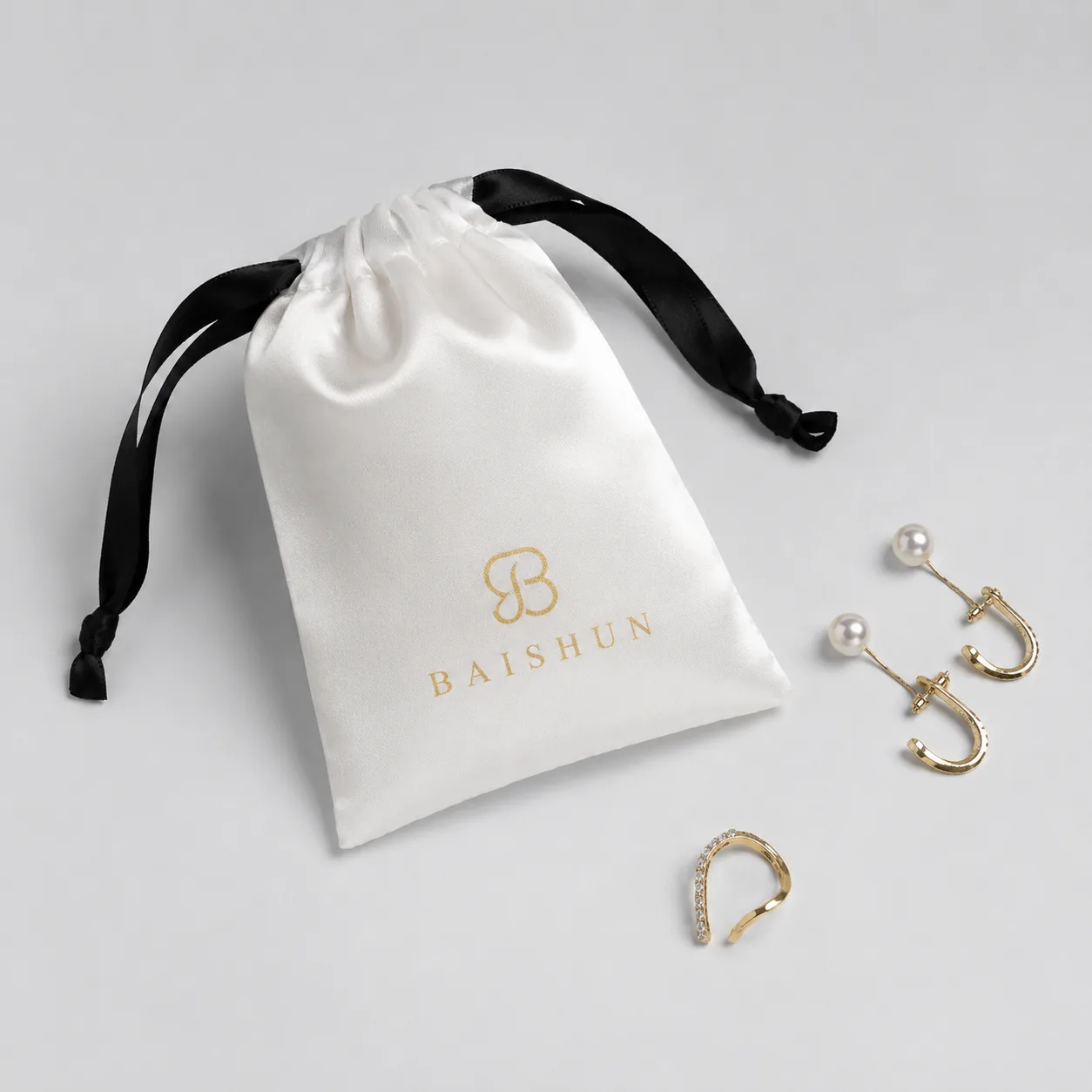
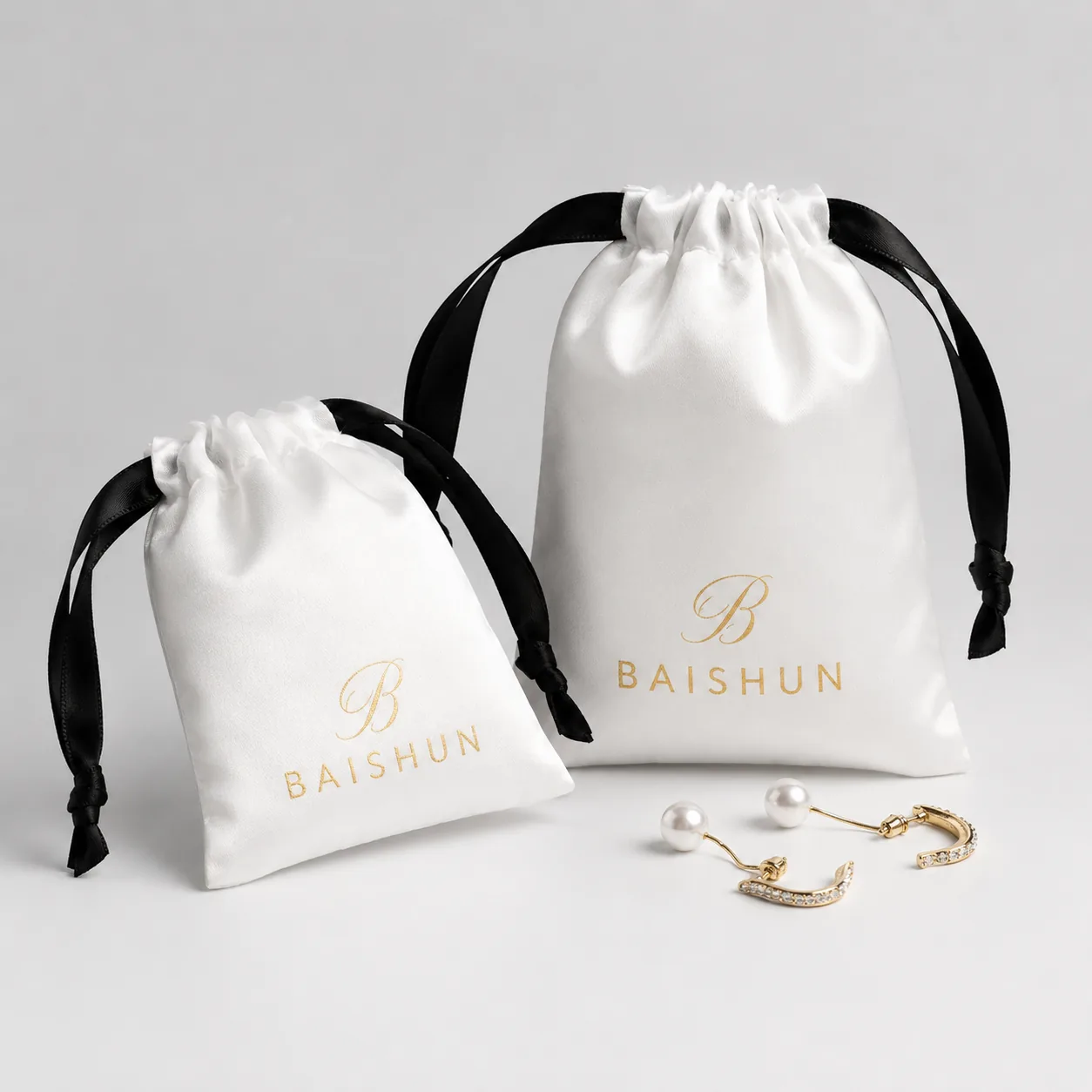
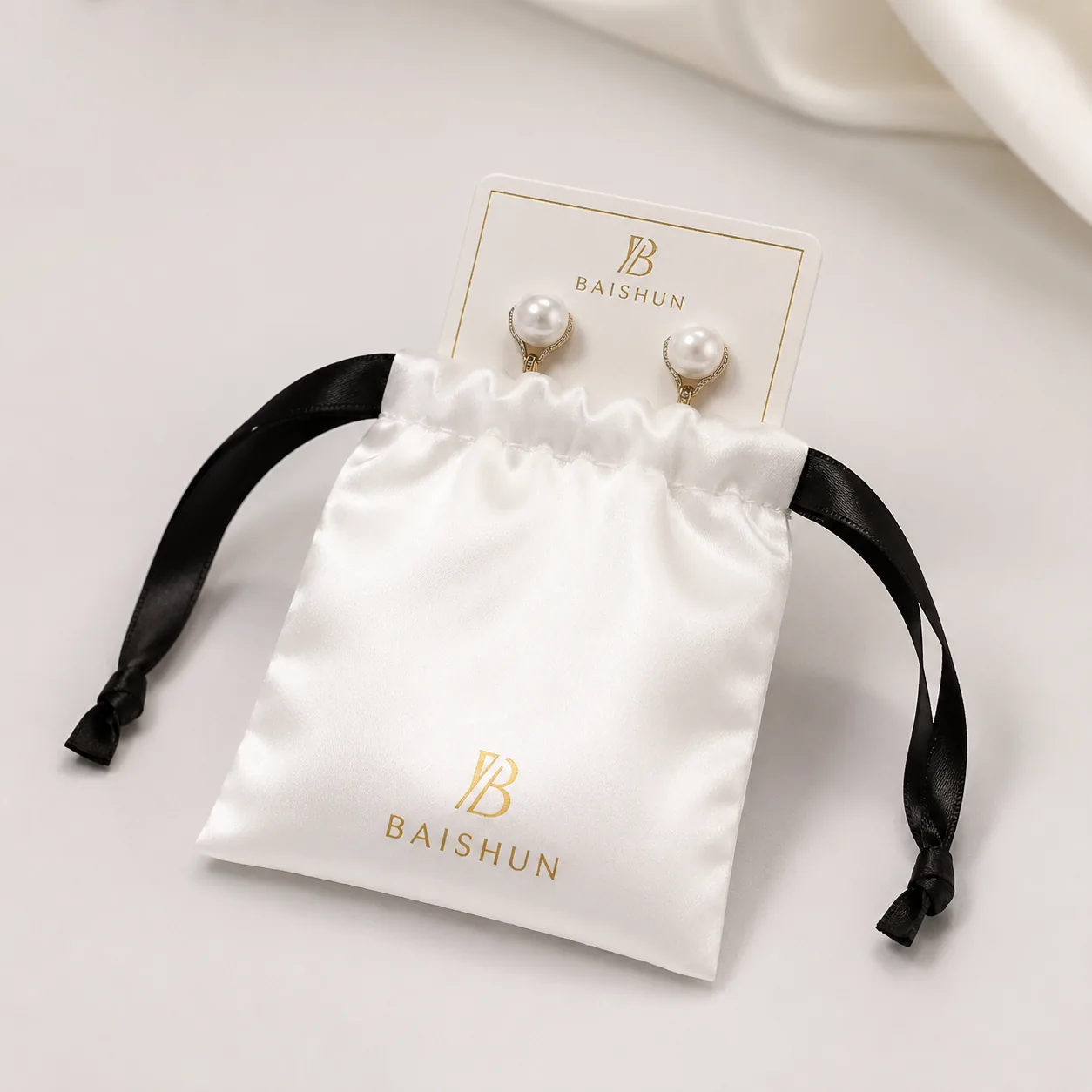
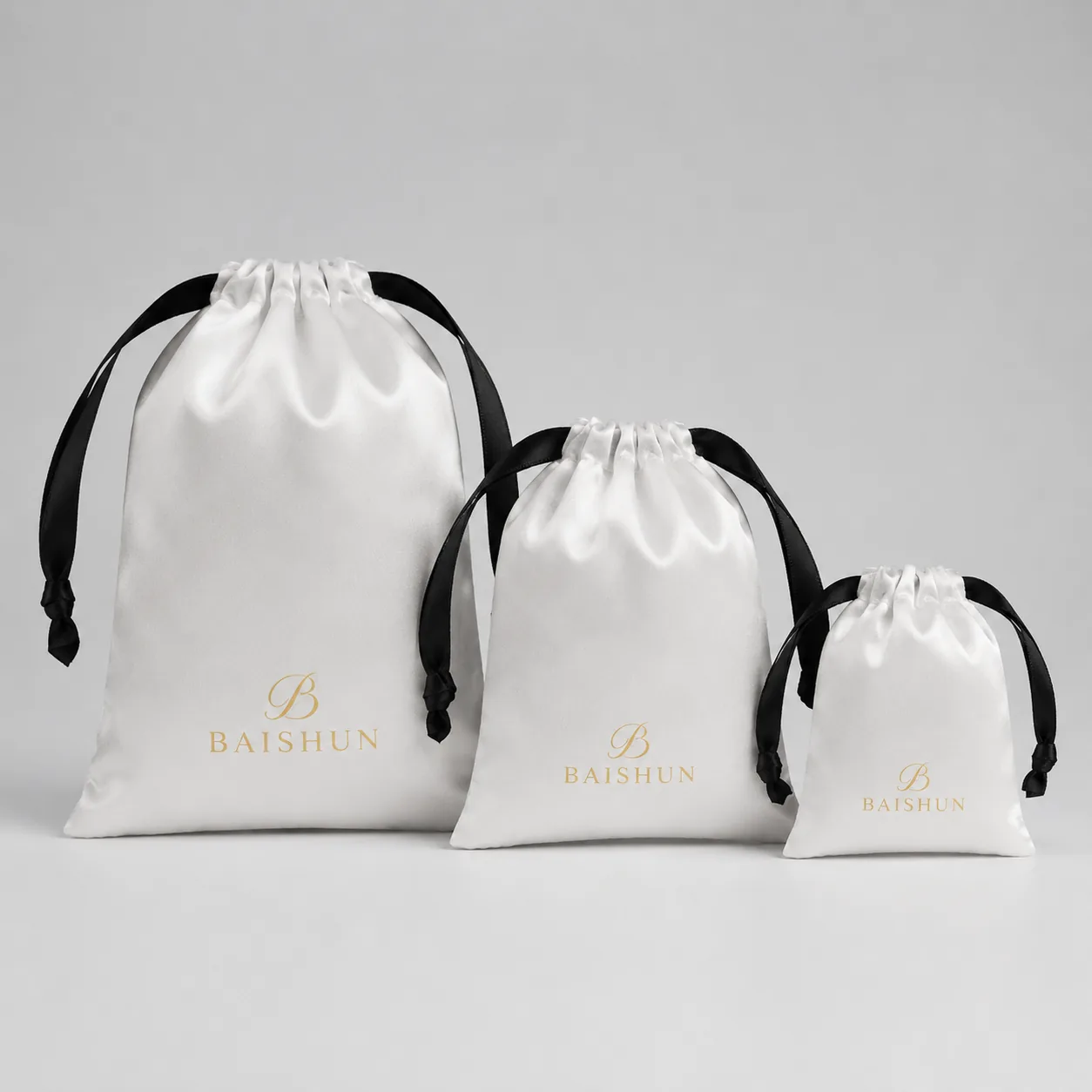
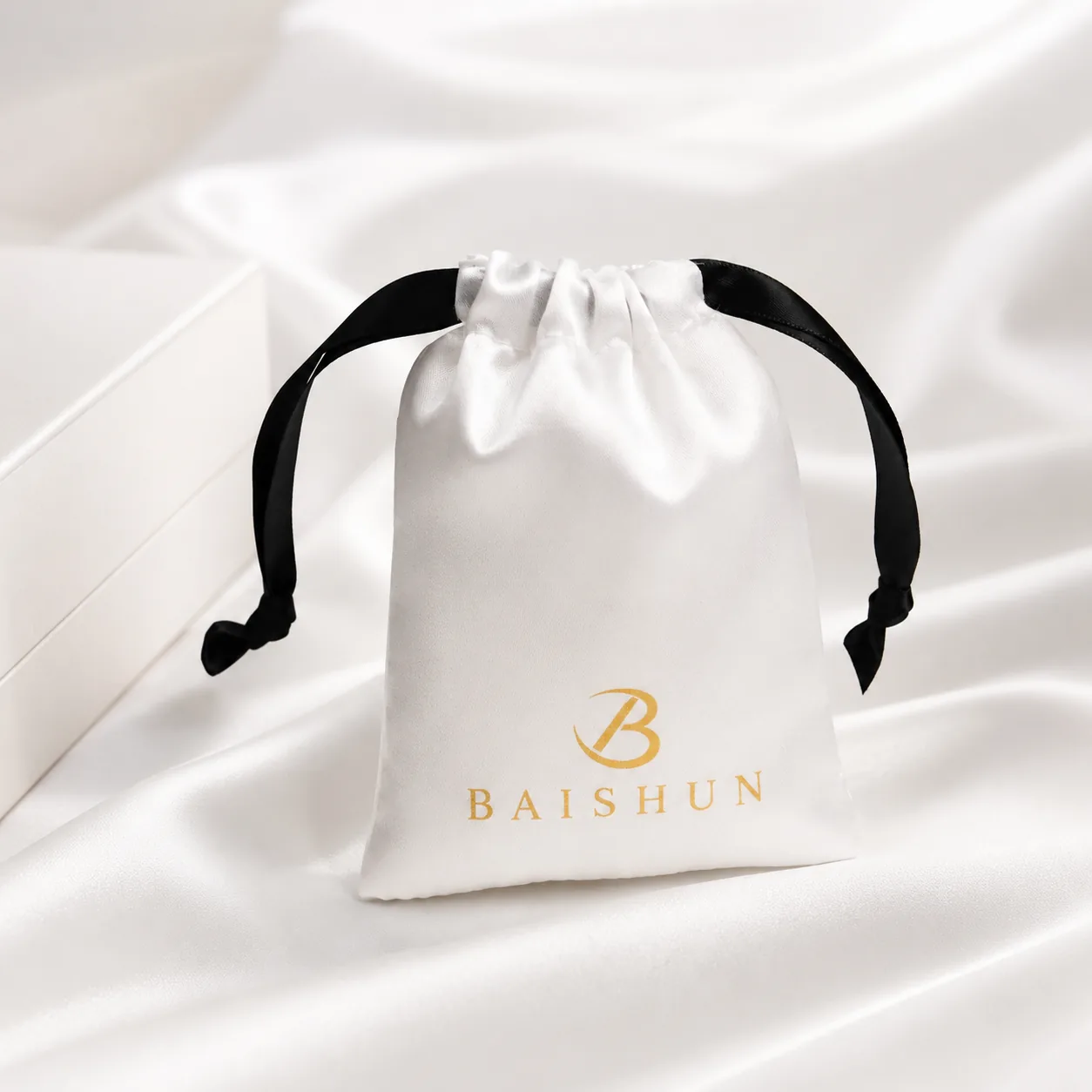
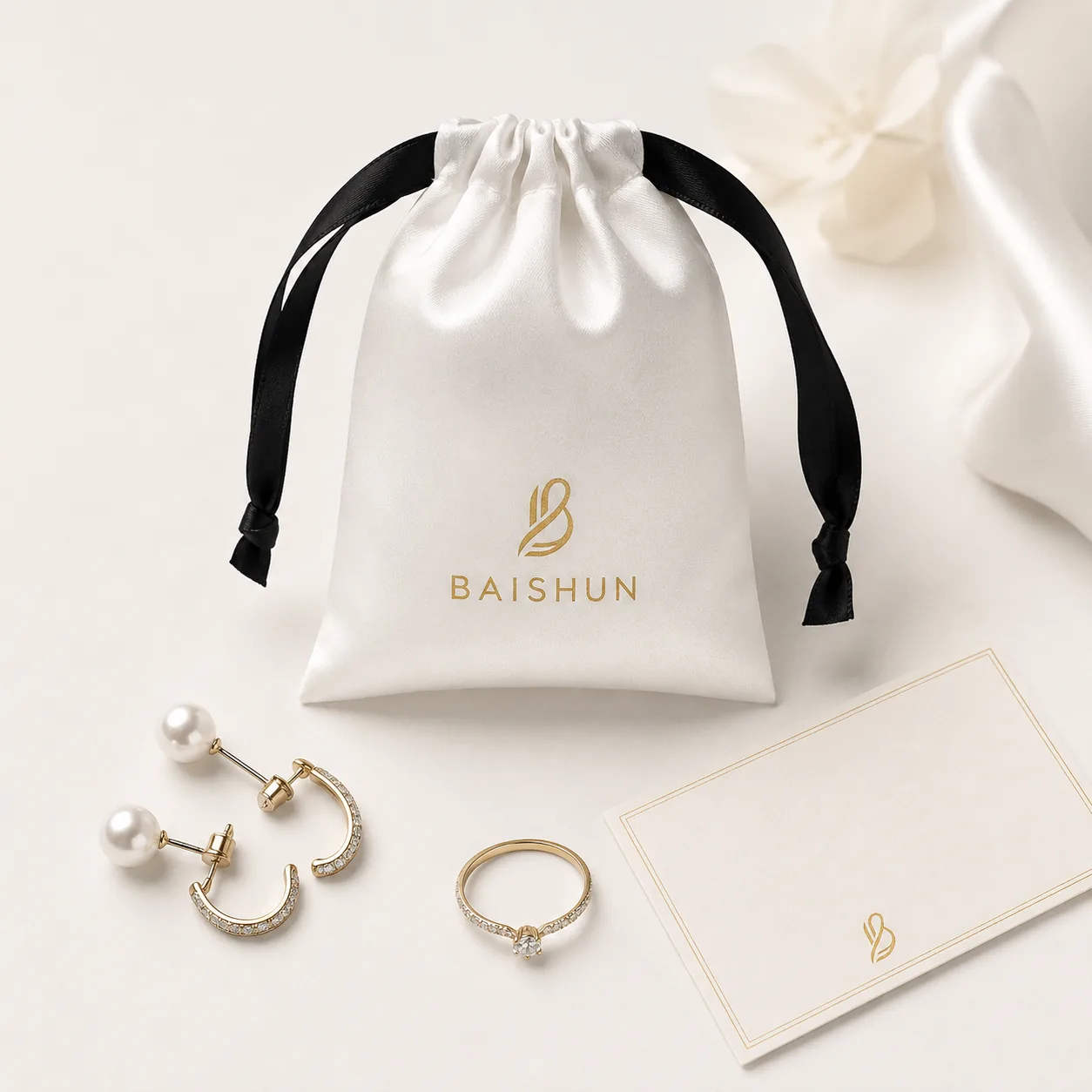
The workhorse of the satin range
This is the base satin drawstring construction, and the reason it runs to a colour range this wide is that the pattern and the closure are settled — once those are fixed, colour is the only variable left, and adding one is a fabric decision rather than a development one.
That makes it the practical starting point for any programme that needs a family of pouches rather than a single item: multiple colours for product variants, seasonal runs off one approved pattern, or a base construction that stays constant while the branding changes.
What satin does that other fabrics do not
The face is friction-free. That is the whole argument for satin in packaging — it is what makes it the standard for wig, hair-extension and lingerie pouches, where anything with texture would catch. The same property makes it easy to slide a piece in and out repeatedly without abrading it.
The trade-off is that high-gloss satin shows fingerprints and handling marks. In a gifting context, where the pouch is handled once, that is irrelevant. In retail, where it is picked up repeatedly, a matte satin usually holds up better on the shelf.
Specifying colour across a wide range
The tiles on this page are the approved photography for each SKU, which makes them a browsing tool rather than a colour reference. Satin is reflective, so on-screen colour is further from production colour here than it would be on a matte fabric.
For any programme where colour is part of the brand, send a physical reference and approve a physical swatch under the lighting the product will actually sell in. For a multi-colour programme, approve the whole set together rather than one at a time — colours that each look right individually can sit badly as a family.


