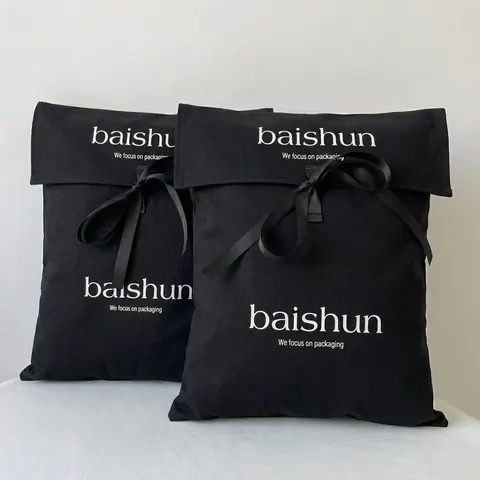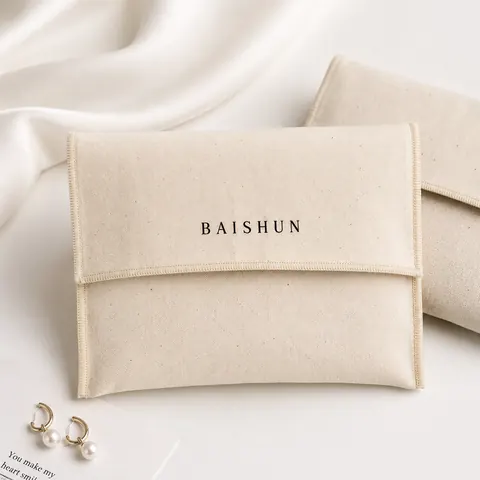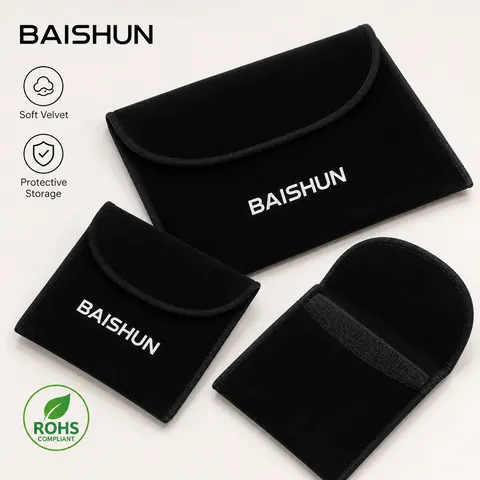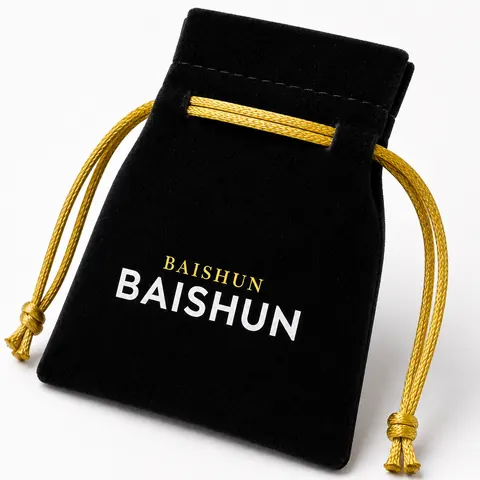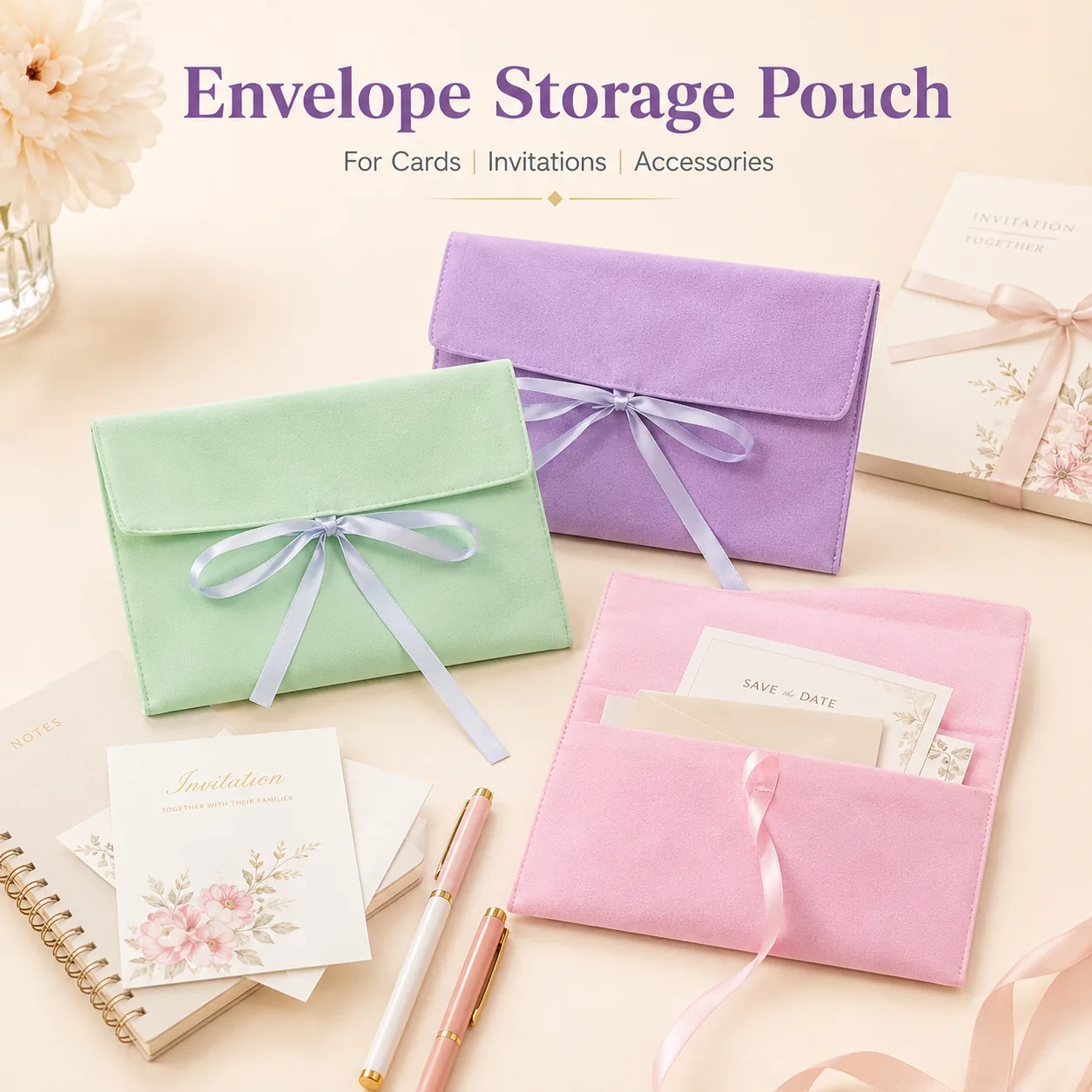
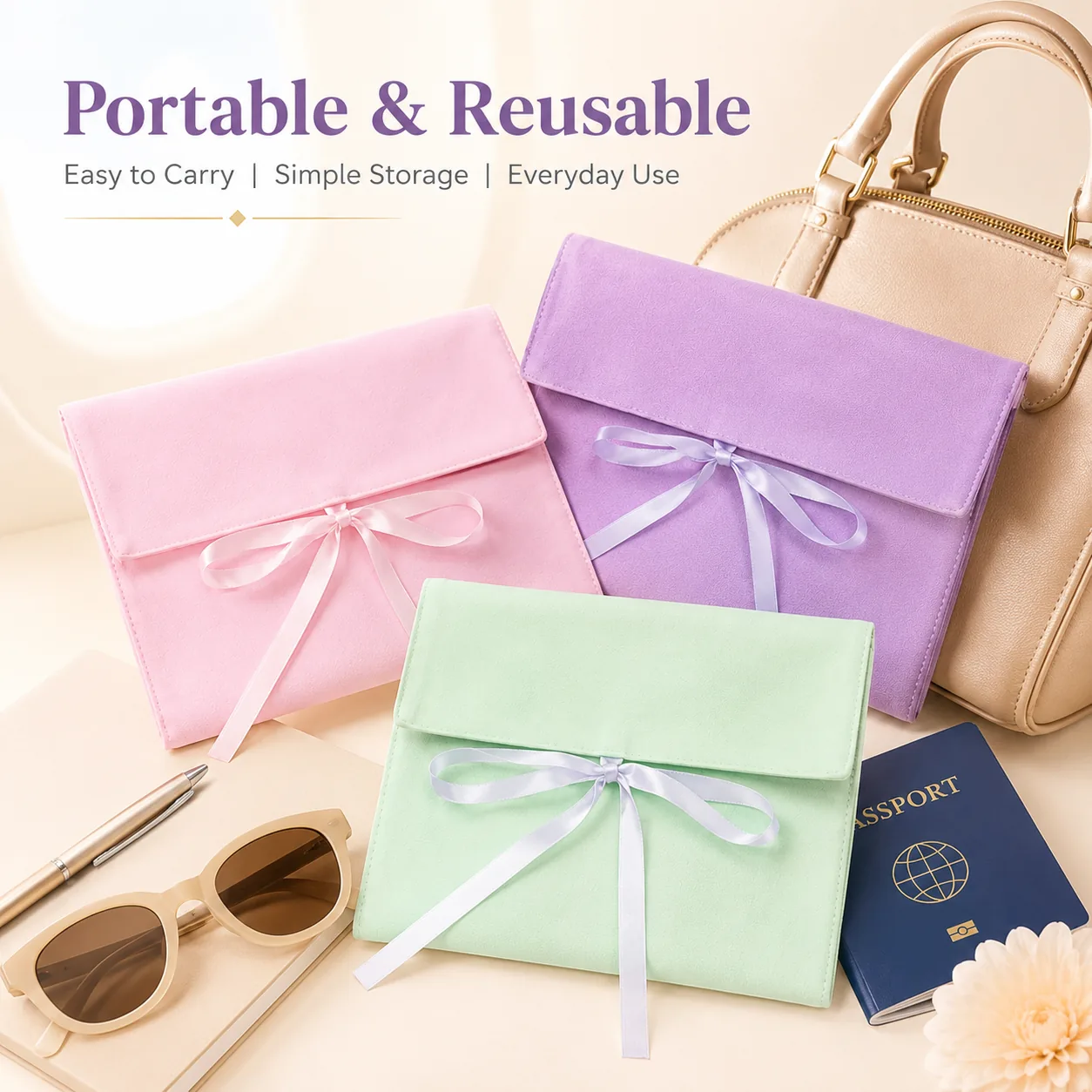
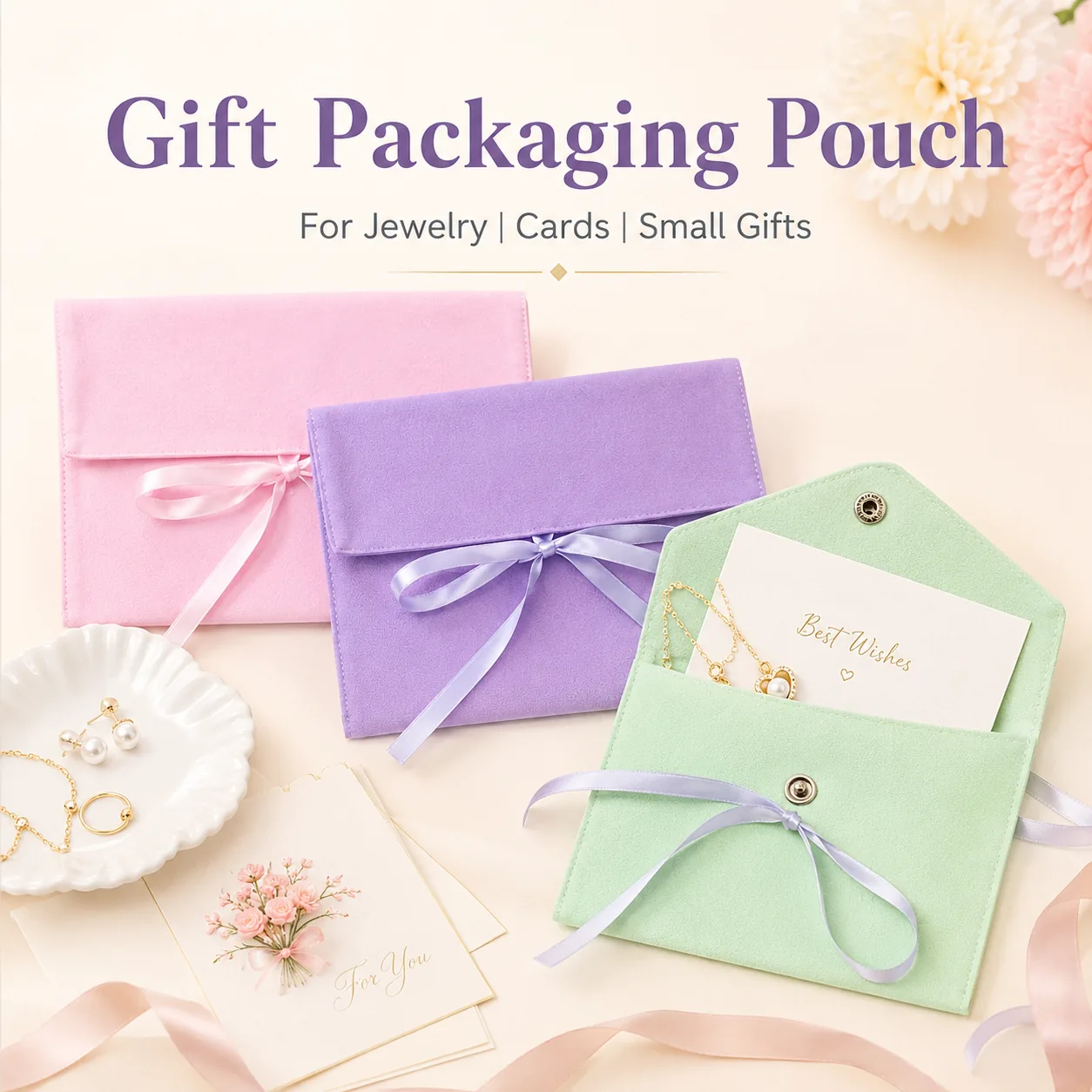
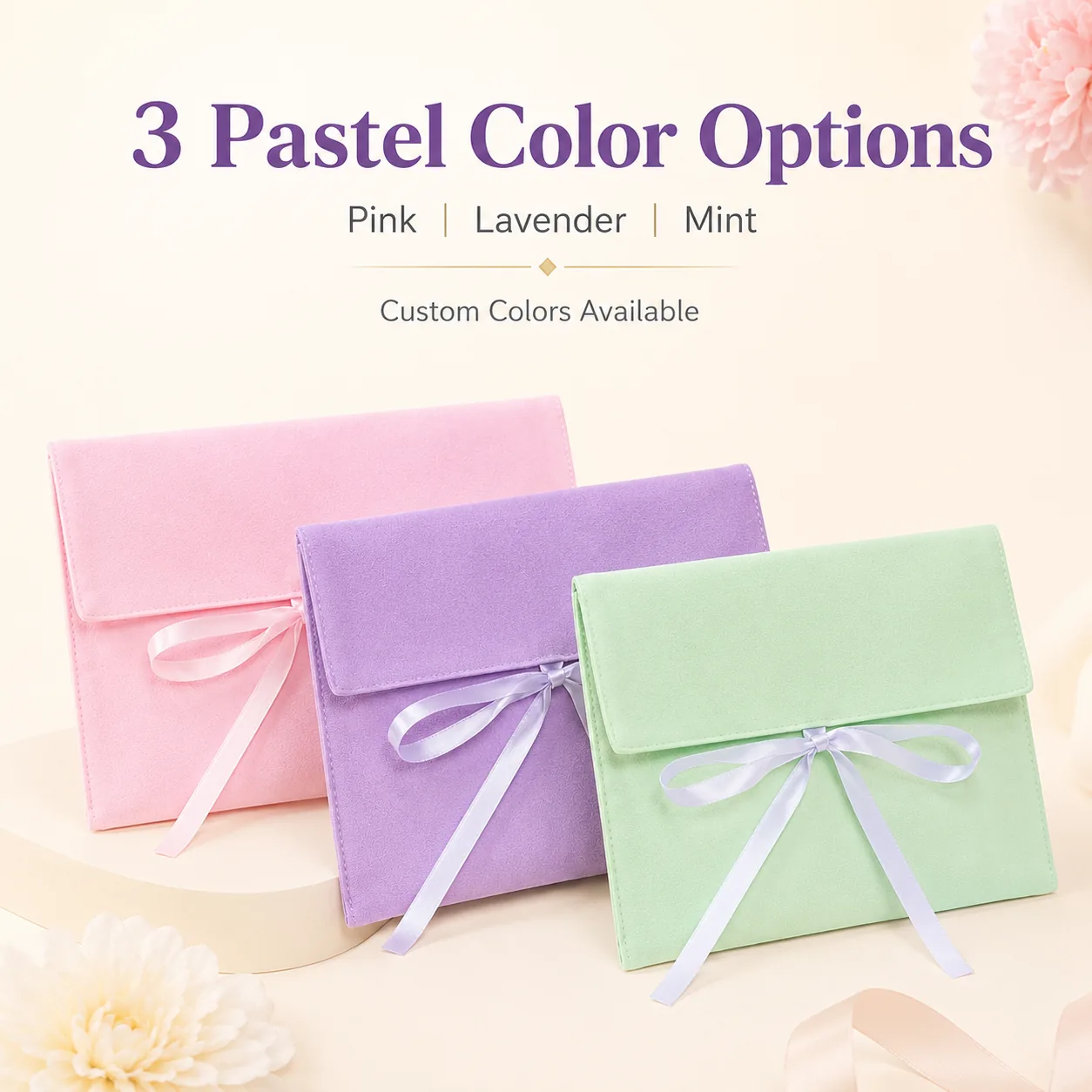
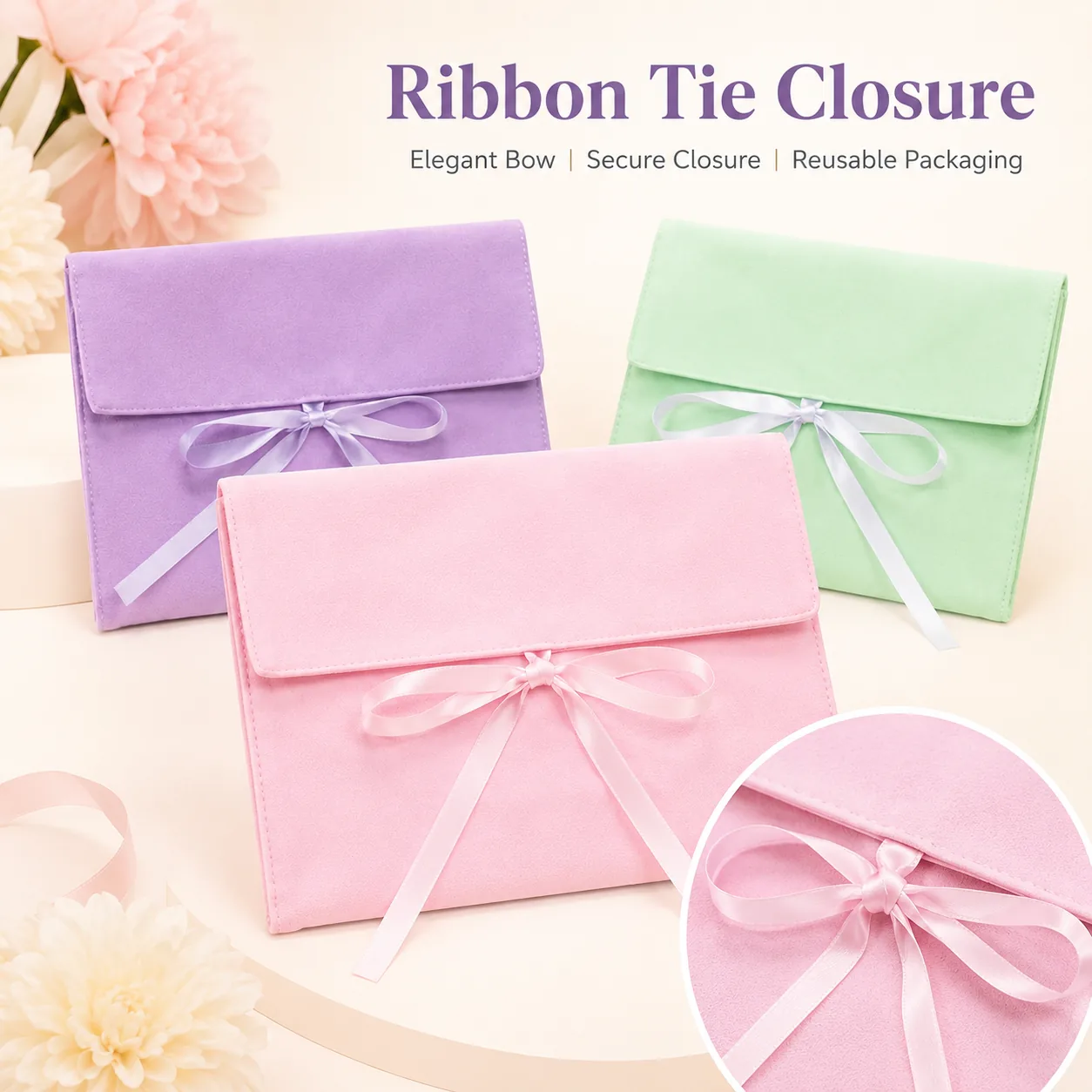
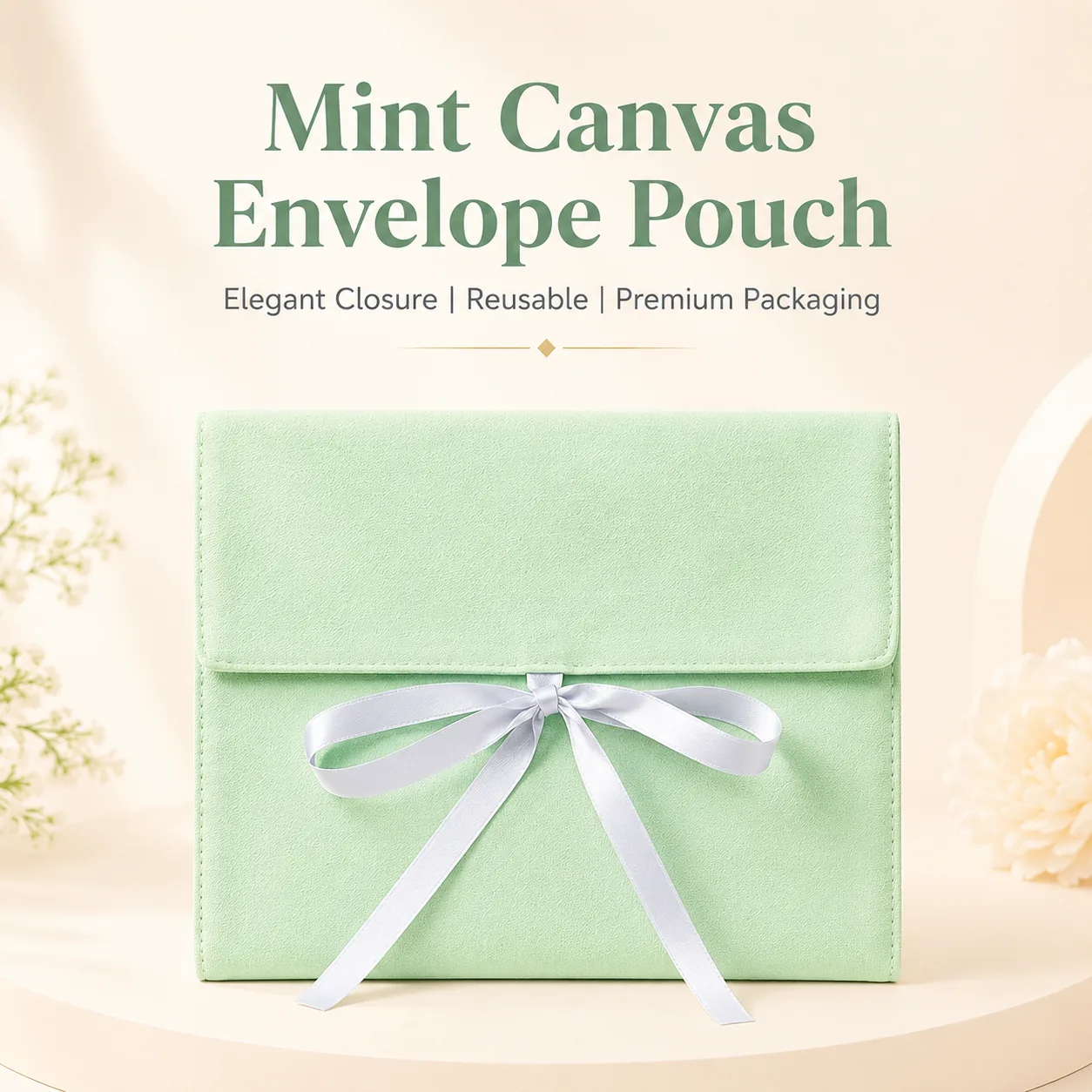
A ribbon-trimmed flat format
This construction combines the two things buyers most often want from envelope packaging: a flat profile that ships and stacks efficiently, and a ribbon detail that stops it reading as purely functional.
Because the ribbon is a trim rather than the closure mechanism, it can change colour across a range without touching the pattern — which makes this a practical base for a programme that needs colour variants off one approved construction.
Flap depth from packed thickness
The flap has to lie flat when the pouch is full. That depth comes from the packed thickness of the contents, not from their outline, and it is the most common reason an envelope-style first sample has to be remade.
Send all three dimensions of what goes inside. Depth is the one buyers most often omit and the one that decides this construction.
Approving trim against body
Trim and body are approved as a relationship. Send both colour references and judge them on one made sample under retail lighting — a ribbon selected against a swatch card frequently reads differently once it is sewn onto the finished pouch.
Source This Exact Reference: ENV-007
Reference identity. Ask for “Colored Fabric Ribbon Envelope Pouch” and include SKU ENV-007. The published gallery displays 6 views, so the sales team can separate this photograph from similar envelope bags.
Specification checkpoint. Published reference fields are Product Type: Ribbon Flap Pouch; Closure: Ribbon; Applications: Gift, Stationery. Confirm the item dimensions, flap overlap, closure, lining requirement and logo position before sampling.
Comparable quote input. Send the item dimensions, order quantity, destination, artwork and target use with the SKU. Pricing, MOQ and timing are confirmed against those inputs rather than inferred from the photograph.