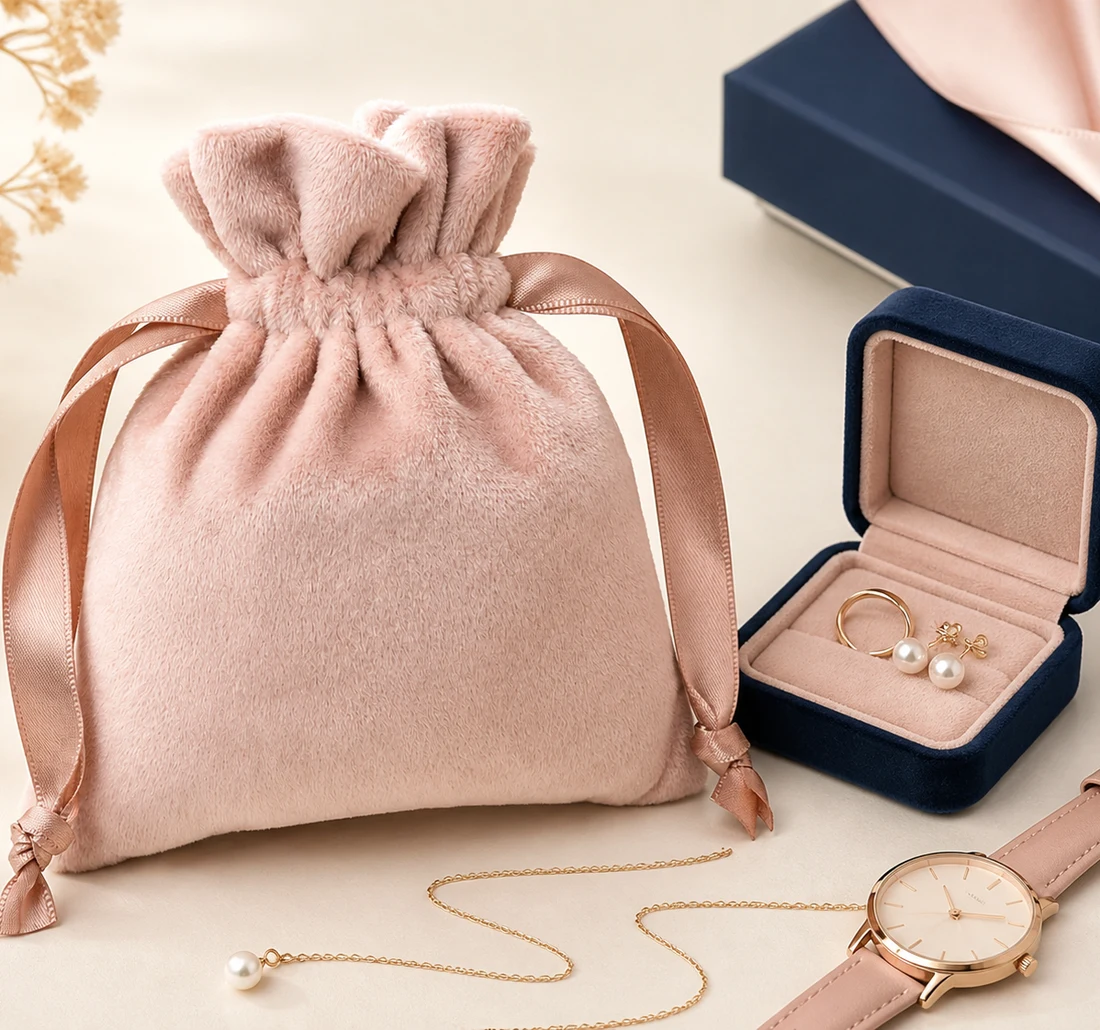
Jewelry is bought for how it feels, and the packaging is the first thing the customer touches. A plain plastic mailer undersells a piece; a fully printed box set can cost more than the margin allows. The answer for most small brands is not to spend more, but to spend in the right place.
Spend on the layer the customer touches first
When the parcel is opened, the pouch is what gets handled and photographed. That is where fabric and branding earn their cost. The outer mailer can stay plain; the pouch inside should carry the brand.
Fabric sets the tone before the logo does:
- Velvet reads as classic and rich, especially in deep colours. See the Red Velvet-Look Drawstring Pouch (VEL-019). Velvet is a pile fabric, so its colour shifts with the direction of the nap — approve a physical swatch, not a photo.
- Microfiber suede has a soft, matte, low-lint surface that suits fine jewelry and takes foil cleanly, as on the Microfiber Pouch and Drawer Box Set (MFB-001).
- Satin gives a smooth sheen that works for gifting and bridal pieces, like the Satin-Look Drawstring Pouch (SAT-019).
- Cotton feels natural and honest, and is the most economical at volume — for example the Green Cotton Drawstring Pouch (COT-013).
Compare them side by side in the jewelry packaging material guide.
Customise one element, keep the rest stock
A single custom element, used consistently, does more for a brand than several half-finished ones. Put your logo on the pouch and keep the mailer, tissue and card stock. Baishun Pack's MOQ is 100 pcs, including custom logo printing, so a small brand can brand the pouch without committing to thousands of units. The unit price is quoted per specification — size, fabric, closure, logo method and quantity all move it; the pouch price guide explains how.
Match the logo method to the fabric
The logo method should suit the surface it sits on. Foil stamping in gold, silver or rose bonds most reliably to dense, smooth fabrics such as microfiber suede and satin; on velvet it holds solid shapes better than fine lines. Silk screen suits spot-colour designs on cotton and canvas. Embroidery adds texture where the fabric can carry it. If you are unsure, read pouch printing methods compared and foil stamping on fabric before you finalise artwork.
Add a box only where the piece needs structure
A pouch is enough for most rings, earrings and everyday pieces. Signature pieces, sets and gifts can justify a rigid box because it adds structure and is kept afterwards. The Drawer Jewelry Box and Pouch Set (BOX-001) pairs a drawer box with a matching pouch, so the box carries the presentation and the pouch carries the brand. Using both only on your top line keeps the average packaging cost down.
Plan the timing before the launch date
Allow for a sample before bulk. At Baishun Pack, physical samples take 3–7 days and bulk production typically takes 8–15 days, followed by shipping. Approve fabric colour, logo position and size on the sample, then reorder against the same specification so the second batch matches the first.
Use one size system across the range
Pouches that fit loosely look cheap; pouches that are too tight crease the piece and slow down packing. Size each pouch from the item as packed, including any card or insert, and keep the range to a few sizes so the same pouch appears across many products. The pouch size guide explains what to measure.
A quick checklist
- One custom layer (the pouch), consistent across every order.
- Fabric chosen for the piece and the photo, approved on a real swatch.
- Logo method matched to the fabric, artwork sent as vector.
- Boxes reserved for the pieces that need structure.
- Sample approved before bulk, with the specification written down for reorders.
Browse custom jewelry pouches, velvet pouches and cotton drawstring pouches, or send your specification for a quote.