Closure is usually chosen last and it should be chosen early, because it changes the pattern, the internal size and the unit cost more than fabric does.
Drawstring
The most common construction in fabric packaging. Simple, low-cost, forgiving of slightly varied contents, and it presents well as a gift.
Its cost is space. The channel and the gather need headroom above the contents, so a drawstring pouch is always meaningfully taller than its contents. It also does not seal — a drawstring pouch keeps dust off and holds things together, but it will not stop a small item working its way out in a bag.
Envelope flap
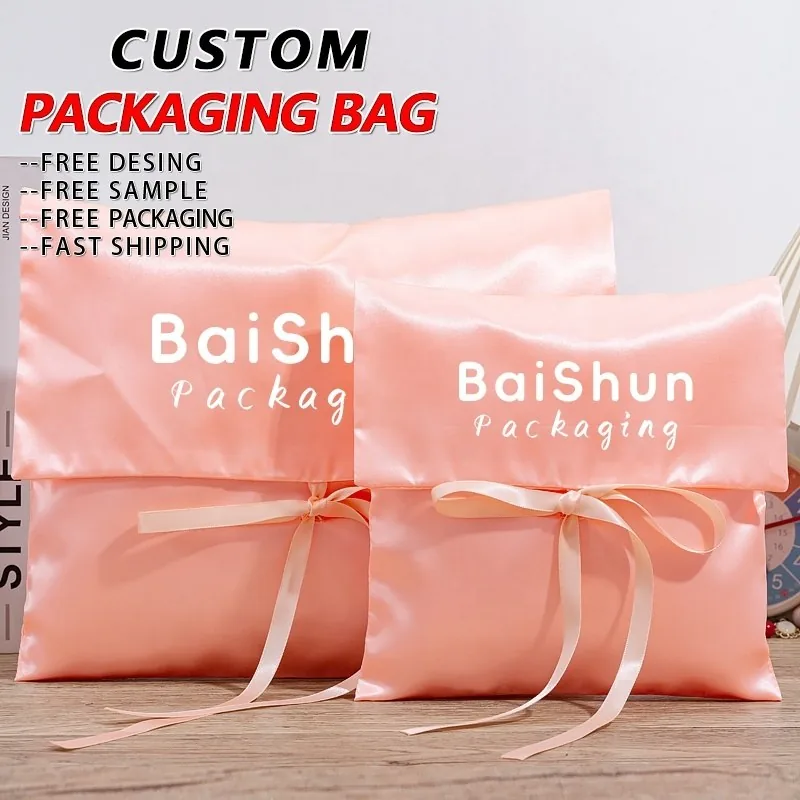
A flap gives a clean, flat presentation and a defined "opening" moment, which is why it is common in jewelry and accessory packaging. It sits flatter than a drawstring for shipping.
The detail that gets missed: the flap must lie flat when the pouch is full, not just when it is empty. Flap depth is specified from packed thickness. This is the most frequent reason an envelope pouch sample gets rejected.
Snap
A flap with a snap closes positively and stays closed, which matters for anything that will be carried loose in a bag. It adds hardware cost and one more thing that can be positioned wrong, so snap placement is worth confirming on a packed sample.
Zip
The only closure here that actually closes. Necessary for cosmetics, travel, and anything that would otherwise escape. It also gives the pouch more structure.
It is the most expensive option and the one most affected by quality: zip feel is the detail buyers most often approve from a photo and then want changed. Specify the zip type and pull, and check both physically. A zip also needs seam allowance all round and a straight run for the tape, which constrains shape.
Fold-over
Minimal, no hardware, and a soft look. It needs enough extra length to fold and still cover, and it holds least securely of the options here. Best for presentation pieces rather than protective ones.
Choosing
Start from two questions: does the pouch need to actually contain the contents against gravity and movement, and how many times will it be opened? Anything that needs true containment goes to zip or snap. Anything opened once, as a gift, can take drawstring or flap. Anything opened daily should be checked physically for how the closure behaves after repeated use, because that is not visible in a first sample.