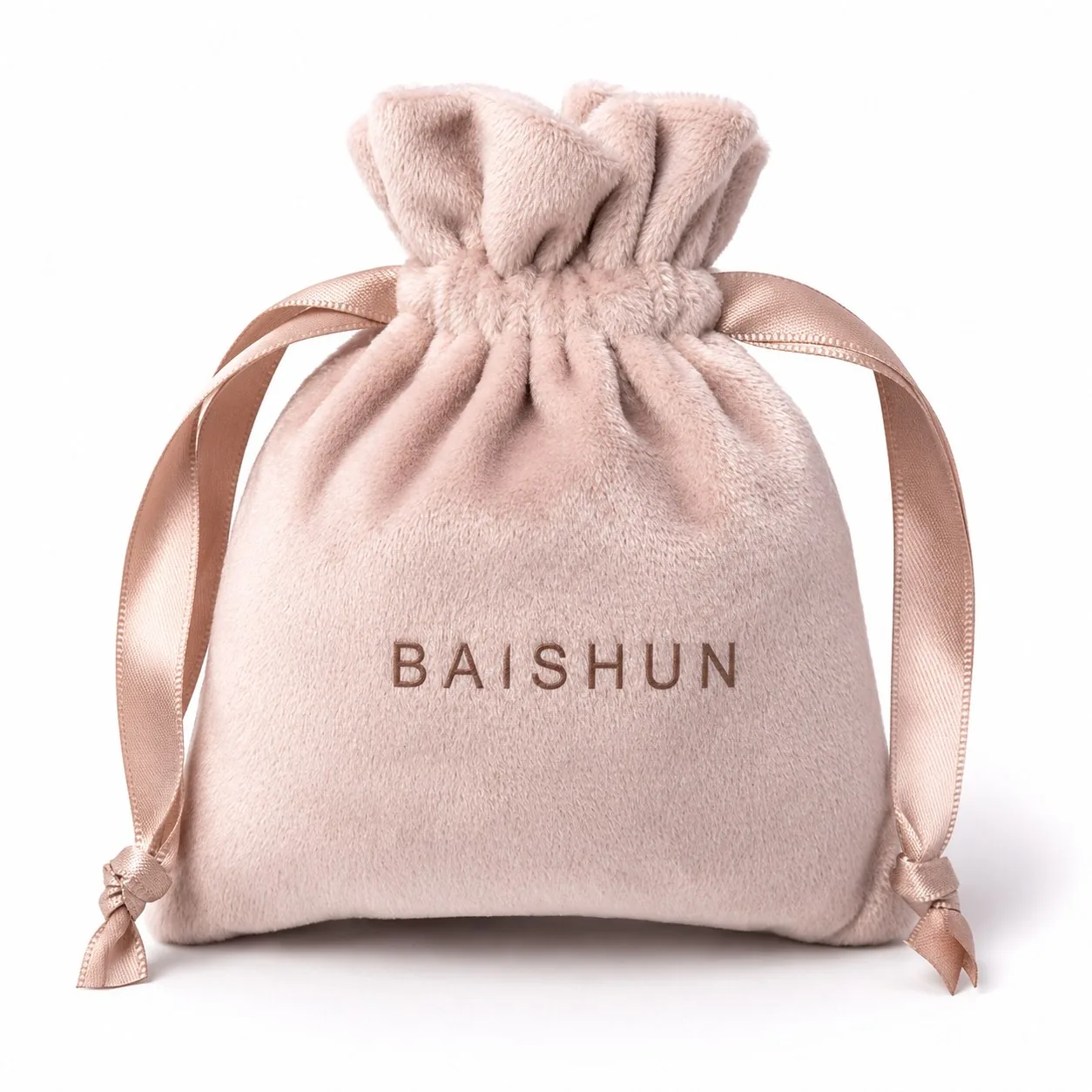
These two fabrics take the majority of jewelry pouch work between them, and buyers routinely pick the wrong one because the difference does not photograph.
Surface behaviour against metal
Microfiber suede has a dense, short, low-lint face. That is the reason it is the default where the fabric is in constant contact with polished silver, plated surfaces or stones — it does not shed fibres onto the piece and it does not catch on prongs or clasps.
Velvet has a longer pile with more visual depth. It presents beautifully and it is the traditional choice for gift and counter presentation, but the longer pile is more likely to shed and to catch on fine settings. For a pendant with an exposed prong setting, that difference shows up in customer complaints rather than in the sample.
Colour under retail lighting
Both are pile fabrics, so both shift colour with pile direction — the same pouch can read two different shades depending on which way the nap runs. Velvet does this more dramatically because the pile is longer.
The practical consequence: approve colour on a physical swatch, under the lighting the product will actually sit in, with the pile running the direction it will run in production. A colour approved from a screen or from a swatch held at a different angle is not approved.
Decoration
Both take foil stamping and blind debossing well, which is why they dominate jewelry packaging — those are the two finishes that read as premium on fabric.
Microfiber debosses more crisply because the shorter, denser pile holds an edge. Velvet takes foil beautifully but fine detail can sink into the pile, so very small type or thin line work is worth checking on a physical stamped sample rather than assuming it will hold.
Wear and handling
Microfiber tolerates handling better and shows finger marks less. Velvet crushes — a pouch that has been packed in a carton under weight can arrive with a flattened patch that recovers slowly or not at all. If pouches ship packed tight in bulk cartons, raise this at sampling and check how the fabric recovers.
Choosing between them
If the fabric touches the piece continuously and the piece has polished surfaces or fine settings, microfiber suede is the safer specification. If the pouch is primarily a presentation and gifting object and the piece is robust, velvet gives more perceived depth for the same money.
Many programs use both: microfiber for the inner pouch that protects, velvet for the outer presentation piece. Send the actual jewelry with your inquiry brief and both can be checked on a packed sample.