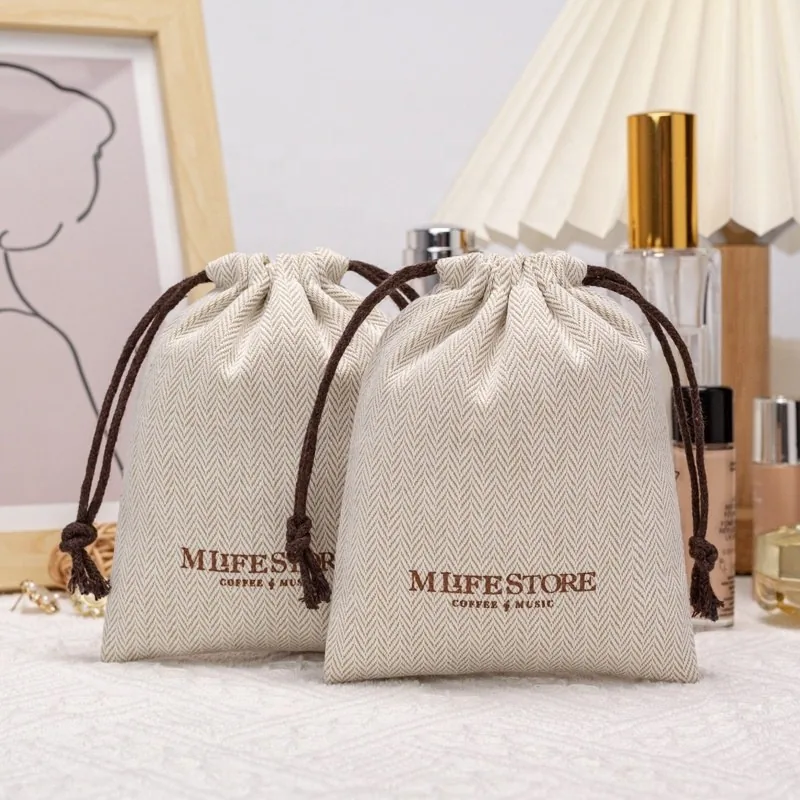
Natural-look packaging is a visual brief before it is a material brief, and the three fabrics that answer it are not interchangeable.
Cotton muslin
Lightweight, smooth and pale. It is the most neutral of the three and the easiest to print on — silk screen and heat transfer both sit cleanly on it because the surface is even. Used for favour pouches, dust bags and general storage.
It offers little structure and little protection. A muslin pouch is a dust cover and a presentation layer, not a protective one. Unbleached options can be discussed where a more raw look is wanted.
Linen and cotton-linen
Visible weave, more body than muslin, and a texture that reads as considered rather than rustic. Herringbone and plain weave are both in regular production here, used for bread sacks, jewelry pouches and organic-look retail packaging.
The texture is the trade-off. Fine print detail breaks up on a visible weave, so small type and thin line work are risky. Embroidery and woven labels suit linen better than fine screen printing does, because they work with the texture instead of fighting it.
Jute
Coarse, strongly textured, and unmistakably natural. It carries the strongest "eco" visual signal of the three and it has real structure — a jute pouch stands up in a way muslin does not.
It is also the least suitable against delicate surfaces. The fibres are coarse enough to mark polished or soft finishes, so a jute pouch holding jewelry or cosmetics usually needs a lining. Print behaves like linen only more so: bold marks work, fine detail does not.
Matching fabric to what goes inside
Working from the contents narrows this quickly. Something delicate and polished points to muslin or a lined construction. Something with weight that needs the pouch to hold shape points to linen or jute. Something where the print is the whole point points to muslin or canvas rather than a textured weave.
On sustainability claims
All three read as more sustainable than synthetic alternatives, but reading as sustainable and being certified are different things. Organic fabric options are available here; if you need a specific certification to make a claim on pack, say which certification with your inquiry so the documentation path can be checked before you commit artwork to a claim.