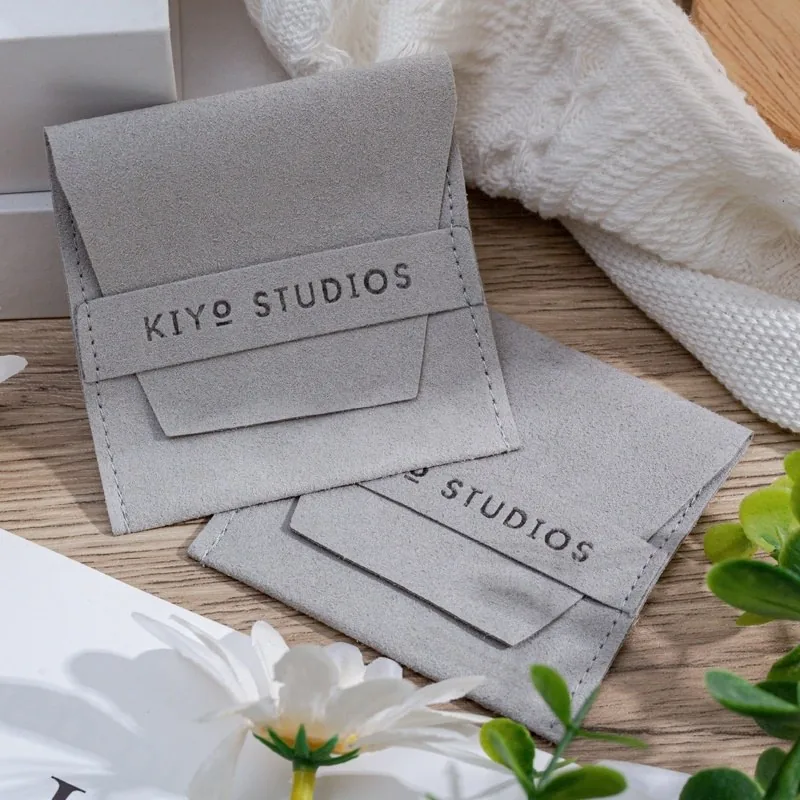
Silver tarnishes when it reacts with sulphur compounds in the air. Packaging influences how fast that happens, and some packaging materials actively make it worse.
What actually causes it
Sulphur is the culprit, and it is present in ordinary air, in humidity, and — importantly — in some materials. Certain papers, adhesives, rubber and some fabric treatments contain or release sulphur compounds. A pouch made from the wrong material accelerates the tarnish it was supposed to prevent.
Humidity speeds the reaction up. Air exposure sustains it.
What packaging can do
Reduce air exchange. A closed pouch slows the rate at which fresh air reaches the piece. A drawstring pouch does this loosely; a zip does it better.
Avoid contributing sulphur. This is the part fully within the packaging specification. Ask specifically about the material and any finishing treatment, and state the anti-tarnish requirement in the inquiry so it is considered rather than assumed.
Prevent physical marking. A low-lint, smooth-faced fabric prevents scratches, which matters because a scratched surface both looks worse and gives tarnish more surface to work on. Microfiber and suede-feel linings are the usual choice here.
What packaging cannot do
No fabric pouch prevents tarnish indefinitely. Time, humidity and air exposure win eventually. Anti-tarnish measures slow the process; they do not stop it, and packaging that is claimed to stop it should be treated with scepticism.
If your storage or shipping conditions are humid, or goods sit in inventory for long periods, packaging alone is not the whole answer — that is a storage-condition problem as much as a materials one.
Specifying it properly
State the requirement explicitly: that the pouch will hold sterling silver or plated pieces, that anti-tarnish behaviour matters, and how long goods are expected to sit before reaching the customer. Then approve a physical sample with your own piece inside — and if long-term storage is the concern, keep a packed sample yourself and check it after a few months. That is the only test that reflects your actual conditions.
Set expectations on pack
If the piece will tarnish eventually — and it will — a care note inside the packaging is worth more than an overstated claim on it. It converts a customer complaint into an expected part of owning silver.